





Würth Elektronik of Germany Launches WE-SLSP Compact Common-Mode Chokes; Small-Space Filtering Drives Precision Magnetic Core Manufacturing
Recommended Blogs
- •HEVO Joins Purdue University to Advance Compatibility Verification of Static, Dynamic and Bidirectional EV Wireless Charging
- •Power capacity expansion in Bac Ninh, Vietnam brings opportunities for magnetic component automation upgrades
- •Sumitomo Electric's Horizontally Recyclable Dust Core Wins SX Award; Low-Carbon Heat Treatment Draws Attention
- •Multi-Specification, Small-Batch Common-Mode Cores: A Flexible Dispensing and Cartoning Line Tackles Changeover Challenges
- •Looking at Magnetic Core Packaging Through Custom Automation in Apple’s Supply Chain: Visual Dispensing, Inline Inspection, and Flexible Changeover
- •Magnetic Component Companies Step Up “Materials + Smart Manufacturing”: What Automation Support Does Flexible Capacity Expansion Need?
- •High Growth in Nanocrystalline Magnetic Cores: As PV and Storage Volumes Rise, Equipment Must Prioritize Mass-Production Consistency
- •Amorphous Nanocrystalline Moves Toward High-Frequency New Energy: How Can Back-End Equipment Meet Demand?
- •Nanocrystalline Automotive Wireless Charging Efficiency Surpasses 98%; Iron Core Production Equipment Builds a Solid Foundation for Green Energy Efficiency
- •Implementing Overseas Automated Magnetic Component Production Lines: How to Adapt to Different Regional Production Standards?
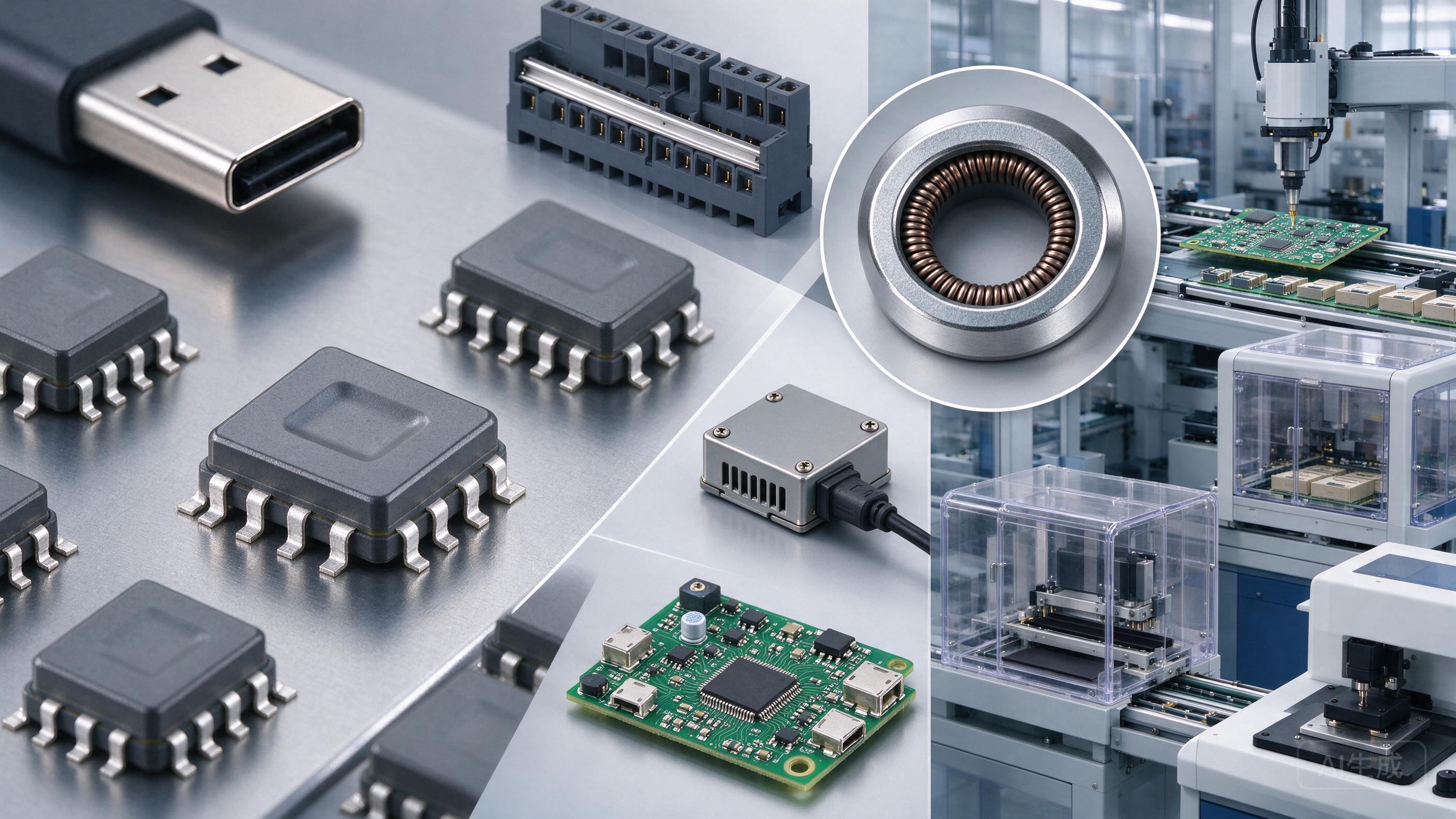
Würth Elektronik of Germany launches WE-SLSP compact common-mode chokes; small-space filtering drives precision magnetic core manufacturing
According to information released by the Würth Elektronik Press Center on November 4, 2026, the company has launched the WE-SLSP series common-mode chokes for signal and data lines. The new product uses a 5050 SMT package, is only 2.5 mm high, has a rated voltage of 100 V, and is designed for space-constrained filtering designs. This article reviews the facts from the overseas release and, in connection with Zhaoqing Chuangke Intelligent Equipment Technology Co., Ltd.'s equipment for nanocrystalline magnetic core heat treatment, glue dispensing and box assembly, tape wrapping, and testing, analyzes automation considerations in the manufacture of miniaturized common-mode components.
Overseas new product: 5050 SMT package and 2.5 mm height
The WE-SLSP series released by Würth Elektronik is a common-mode choke family for signal and data lines, focused on solving electromagnetic interference filtering problems on compact circuit boards. According to the release materials, the product uses a 5050 SMT package, has a height of 2.5 mm, and is rated at 100 V.
This combination of parameters shows that the new product is mainly aimed at applications where board-level space is tight while common-mode noise suppression is required. The SMT package also facilitates entry into automated mass production through surface-mount processes, reducing through-hole insertion steps and improving assembly efficiency.
Target markets: consumer electronics, industrial systems, microinverters, and PoE
According to the overseas release information, WE-SLSP can be used in consumer electronics, 24 V to 48 V industrial systems, renewable-energy microinverters, and 48 V PoE applications. Given its positioning for signal and data lines, high-density signal links such as USB-C interfaces and industrial buses are also noteworthy application directions.
These scenarios have high requirements for component size, withstand voltage, and reliability. Industrial buses and PoE equipment in particular usually need to balance communication stability, power delivery, and electromagnetic compatibility performance in a limited space. Microinverters are in the fast-growing renewable energy sector and are relatively sensitive to the temperature performance and long-term reliability of magnetic components.
Nanocrystalline magnetic core heat treatment: miniaturization does not lower process requirements
It should be noted that the Würth Elektronik release materials do not disclose the specific material of the WE-SLSP's internal magnetic core, so it cannot be inferred that the product uses a nanocrystalline core. The following is only an application analysis of common-mode core manufacturing using amorphous or nanocrystalline solutions and does not indicate that Würth Elektronik has adopted Zhaoqing Chuangke equipment.
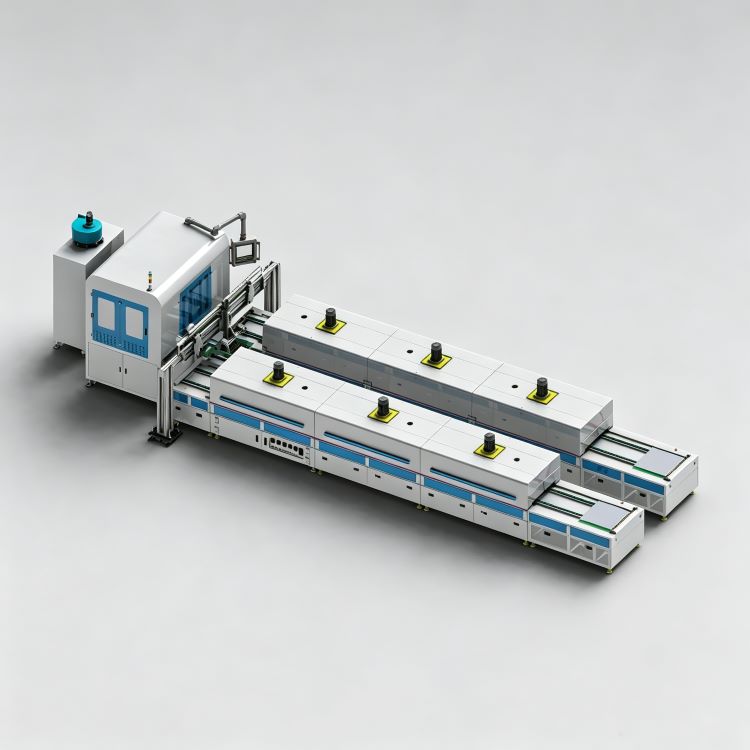
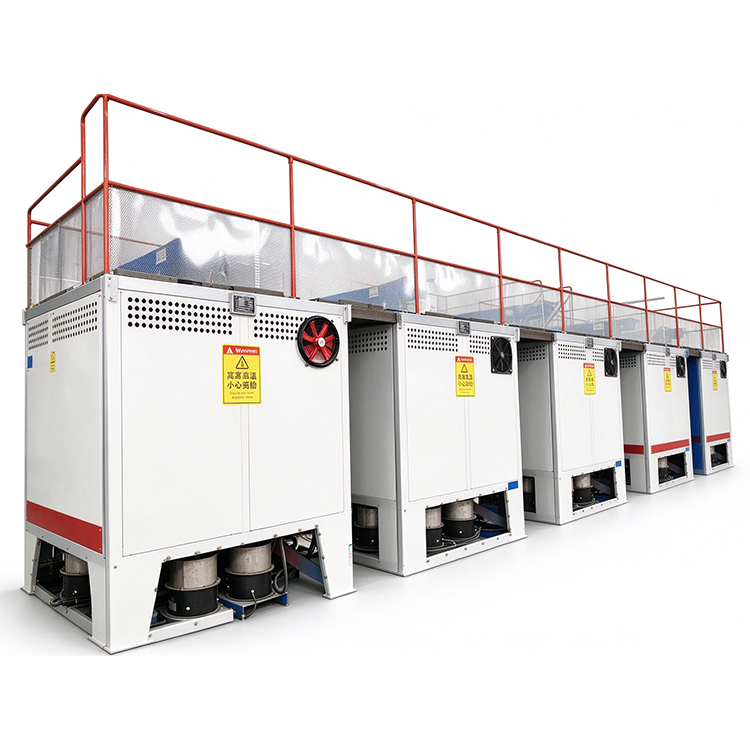
If common-mode chokes use nanocrystalline or amorphous magnetic cores, annealing and magnetic-field heat treatment are key processes. The Chuangke 1800GS transverse magnetic-field annealing furnace (111 kW) is designed for nanocrystalline and amorphous common-mode cores and instrument transformer cores. It supports 0 to 1800 GS transverse magnetic-field output, with a magnetic-field difference of no more than 100 GS among the upper, middle, and lower zones of the furnace chamber, and can support continuous magnetization for 20 hours. Its three-zone independent temperature control accuracy is ±0.2°C, furnace temperature uniformity is ±3°C, and it also has IoT monitoring functions such as recording temperature, magnetization current, pressure, and power consumption.
For vacuum annealing applications, the Chuangke nanocrystalline vacuum annealing furnace is available in 67 kW and 90 kW models and supports 54-segment process programs, storage of 6 process recipes, real-time temperature curves, and historical data export. Small magnetic cores are more sensitive to temperature fluctuations, atmosphere control, and magnetic-field uniformity, and this kind of traceable, programmable heat treatment capability helps stabilize the magnetic properties of cores across different batches.
Glue dispensing, box assembly, and testing: shifting quality control downstream to the component assembly process
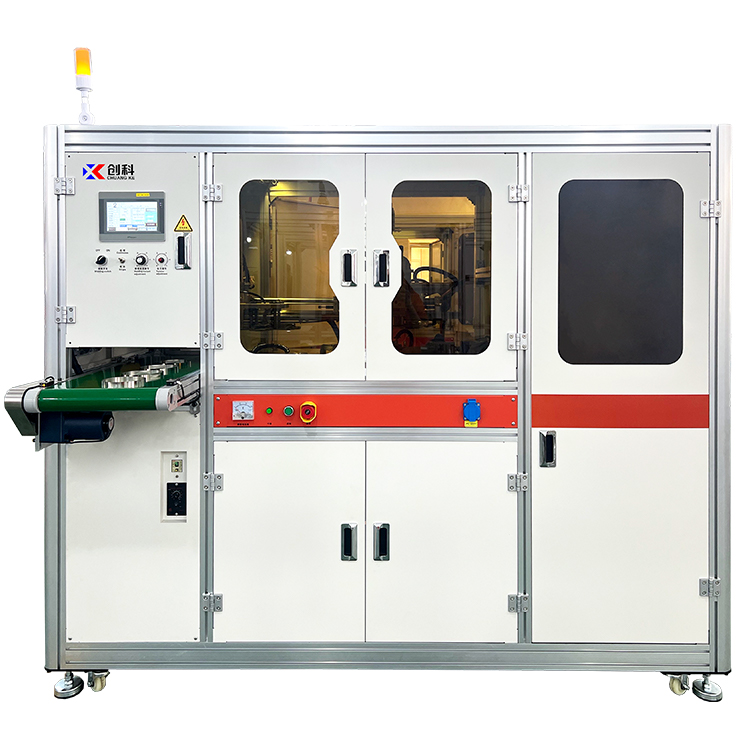
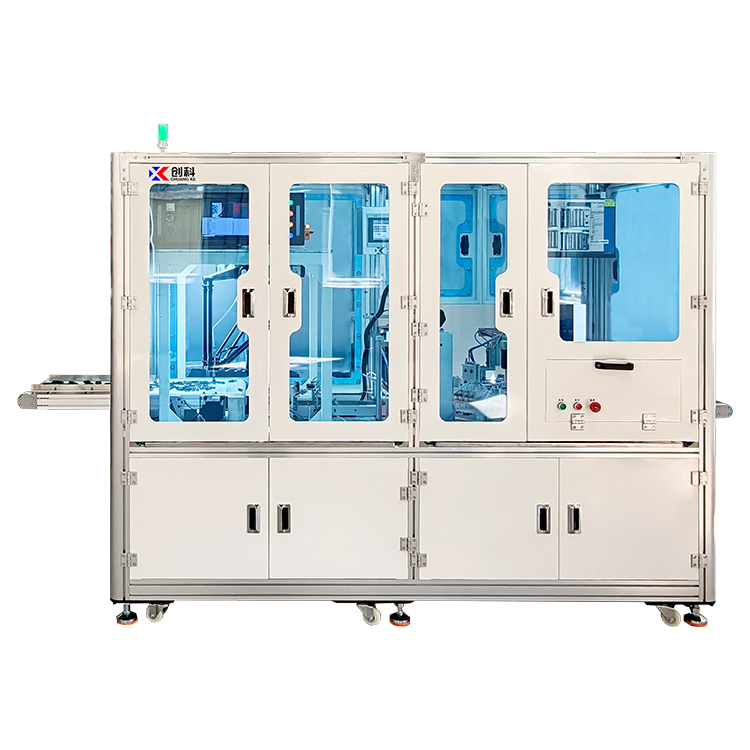
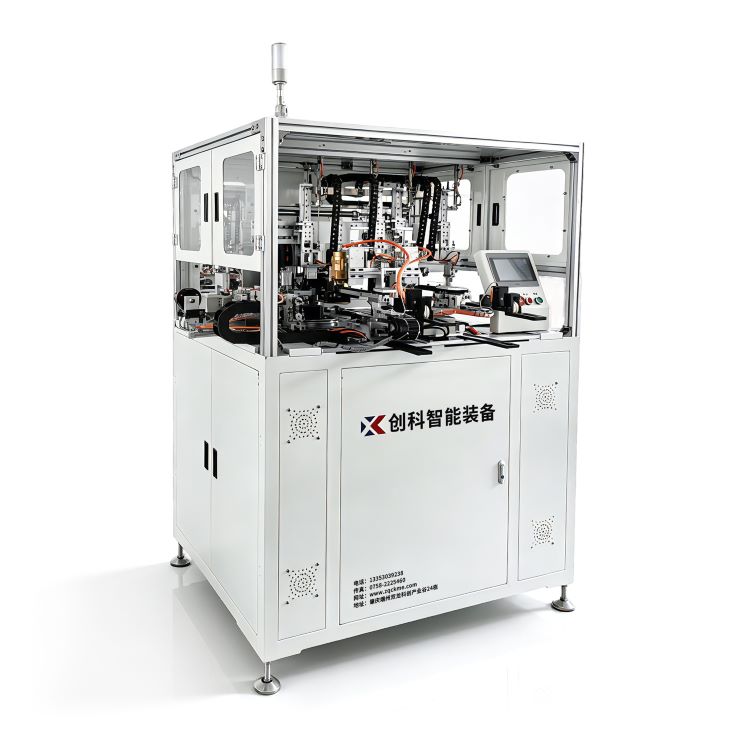
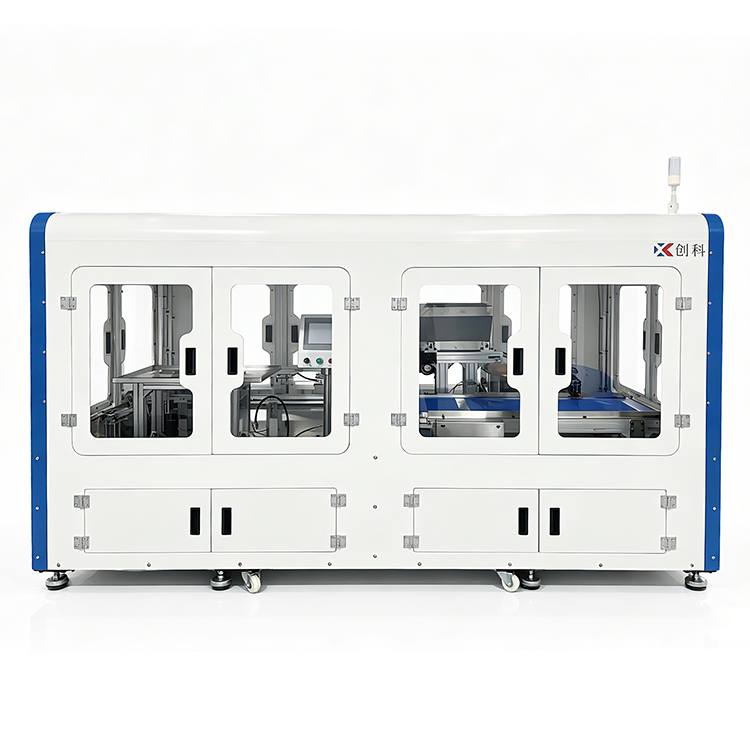
After the magnetic core completes heat treatment, downstream assembly still affects finished-product consistency. The Chuangke flexible glue dispensing and box assembly machine is used for automatic glue dispensing, assembly, pressing, and capping of common-mode cores, plastic bottom cases, and top covers. The equipment uses flexible vibratory feeder bowls and robotic arms for loading; bottom cases and top covers are independently glued, and the glue condition is inspected by vision, with glue-defective products automatically rejected.
For production lines that need to directly grade finished products, the Chuangke glue dispensing, box assembly, and testing machine builds on glue dispensing, core loading, pressing, and capping by reserving a single-turn performance test interface that can connect to a customer's inductance tester, and it provides four test grades. The equipment is suitable for products with a protective case height of 8 to 30 mm, inner diameter of 8 to 30 mm, and maximum outer diameter of 45 mm, with a stated capacity of 800 to 1200 pieces per hour.
As SMT common-mode chokes continue to become smaller, glue dispensing position, pressing dimensions, and finished-product electrical performance grading become even more critical. Integrating glue vision inspection and the performance test interface into the same rotary dial station helps reduce inter-process handling and manual misjudgment.
Tape wrapping and marking: adapting to multi-specification batch production
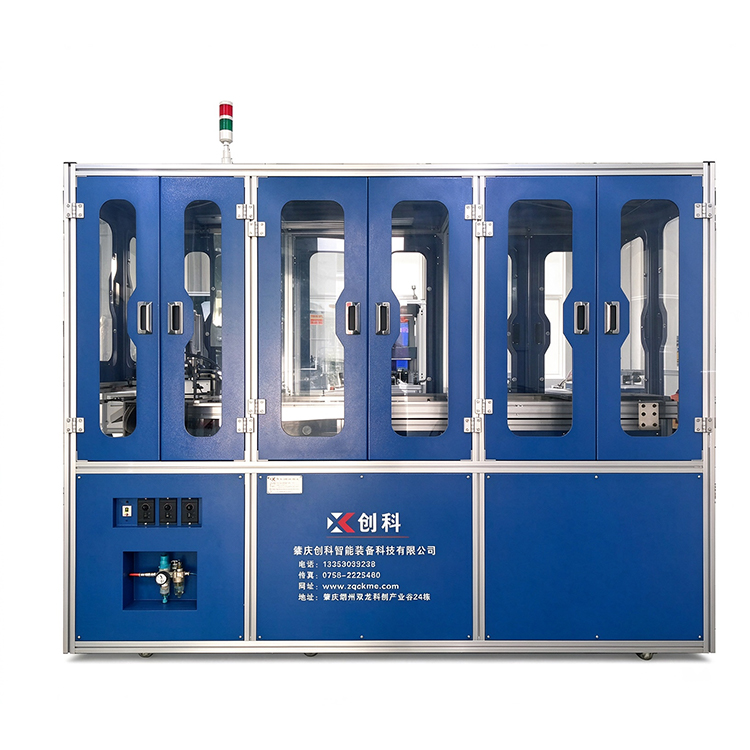
Some toroidal, racetrack-shaped, or rectangular magnetic cores require tape wrapping before or after assembly. The Chuangke racetrack-shaped tape wrapping machine can perform automatic feeding, wrapping, cutting, sealing, and discharging. It is suitable for toroidal, racetrack-shaped, and rectangular workpieces with a height of 10 to 30 mm, inner diameter of 30 to 80 mm, and outer diameter not exceeding 100 mm, and supports wrapping tape with a width of 3 to 30 mm and thickness of 50 to 80 μm.
The equipment adapts to different specifications through parameter settings and can be optionally equipped with laser marking to place LOGOs, characters, or batch numbers on the finished-product surface. For magnetic component manufacturers, the consistency of tape wrapping tension, cut quality, and batch-number marking relate not only to appearance and protection, but also to subsequent quality traceability.
Conclusion
Würth Elektronik of Germany's launch of the WE-SLSP compact common-mode choke reflects that filtering components for signal and data lines continue to move toward smaller size, SMT adoption, and high reliability in applications such as USB-C, industrial buses, microinverters, and PoE. For domestic magnetic materials and automation equipment companies, this trend means that heat treatment, glue dispensing and box assembly, performance testing, and tape wrapping and marking need closer coordination. Zhaoqing Chuangke can provide customized automation equipment and complete-line solutions for amorphous and nanocrystalline magnetic core manufacturing, but specific product adaptation must still be determined according to the customer's core dimensions, glue process, test standards, and capacity targets.
Reference information
- Filtering in the Tightest of Spaces(2026-11-04)
Global Cooperation
Partner With Chuangke, Win Together
Tell us about your production challenges — our engineers will design a tailored automation solution, from single machines to complete Industry 4.0 lines.
Recommended Products
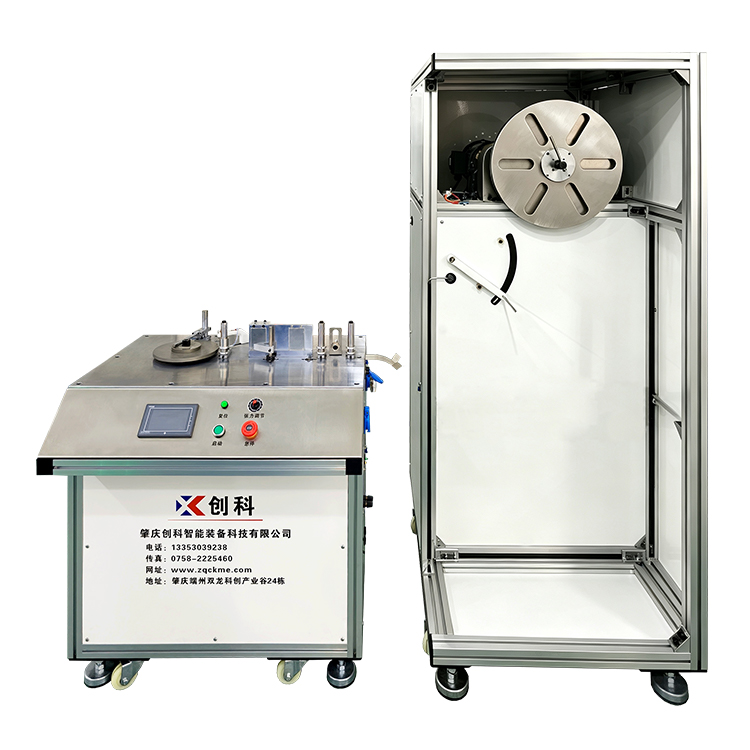 Iron Core Winding Machine
200 Semi-Automatic Horizontal Core Winding Machine
The Chuangke semi-automatic core winding machine is a high-speed, high-precision, intelligent winding device developed for precision cores. Its operating stability, repeatability and durability are greatly improved, with an extremely low failure rate and a simple, reasonable structure. It integrates automatic fault diagnosis, greatly reducing reliance on labor and effectively improving product consistency and production capacity.
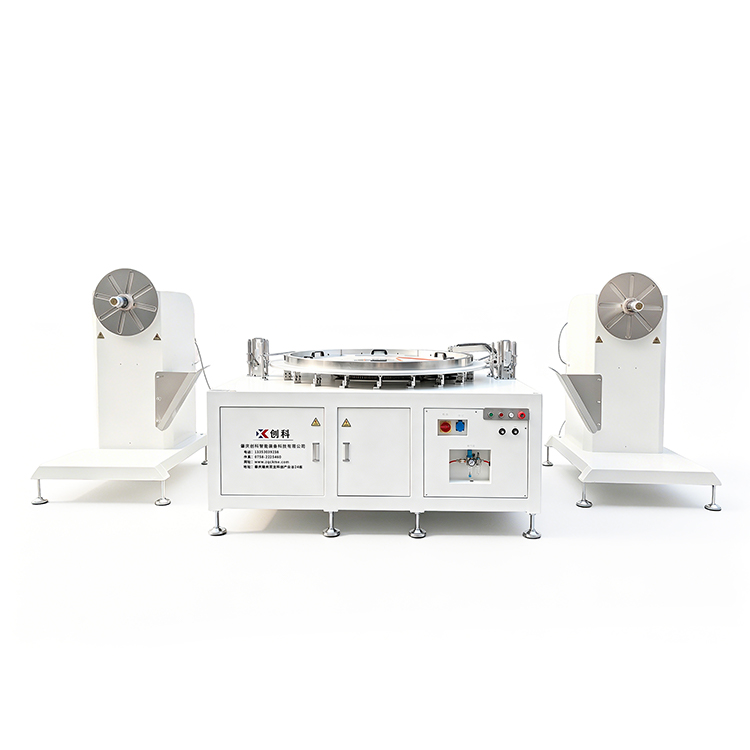 Iron Core Winding Machine
1000 Semi-Automatic Horizontal Iron Core Winding Machine
The Chuangke semi-automatic iron core winding machine is a high-speed, high-precision, intelligent winding device developed for precision iron cores. The equipment’s operational stability, repeatability and durability are greatly improved, with an extremely low failure rate and a simple, reasonable structure. It integrates fault self-diagnosis, greatly reducing reliance on labor and effectively improving product consistency and production capacity.
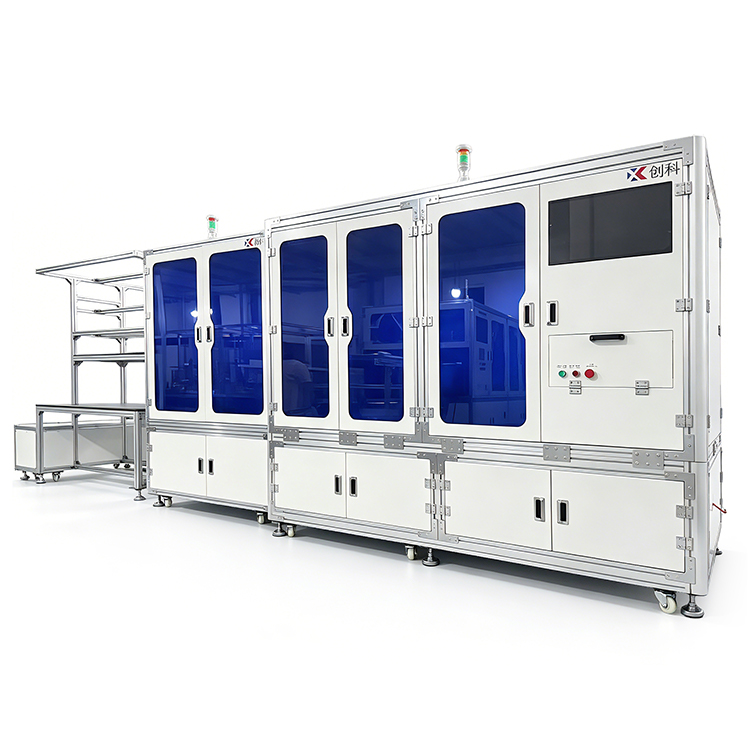 Iron Core Cartoning Machine
Flexible Dispensing & Cartoning Machine
Performs integrated automatic glue dispensing, magnetic core assembly, pressing, and capping for common-mode magnetic cores, plastic bottom boxes, and top covers. The finished product is a common-mode magnetic core assembly after glue dispensing and pressing, suitable for the rear-stage assembly production of common-mode magnetic cores.
 Magnetic Ring Testing Machine
Belt-Type Test Sorting Machine
It mainly consists of a conveyor-belt storage structure, a material-guiding structure, a testing mechanism, a sorting and positioning mechanism, a testing and sorting instrument, and an intelligent control circuit. The conveyor belt automatically arranges products in the same direction and then delivers them to the sorting and positioning mechanism, which uses a rotating motor to send the products one by one to the testing position for testing. The test results are input into the PLC. After processing, the PLC drives the sorting mechanism to automatically grade the products and realize automatic sorting.