






High Growth in Nanocrystalline Magnetic Cores: As PV and Storage Volumes Rise, Equipment Must Prioritize Mass-Production Consistency
Recommended Blogs
- •HEVO Joins Purdue University to Advance Compatibility Verification of Static, Dynamic and Bidirectional EV Wireless Charging
- •Power capacity expansion in Bac Ninh, Vietnam brings opportunities for magnetic component automation upgrades
- •Würth Elektronik of Germany Launches WE-SLSP Compact Common-Mode Chokes; Small-Space Filtering Drives Precision Magnetic Core Manufacturing
- •Sumitomo Electric's Horizontally Recyclable Dust Core Wins SX Award; Low-Carbon Heat Treatment Draws Attention
- •Multi-Specification, Small-Batch Common-Mode Cores: A Flexible Dispensing and Cartoning Line Tackles Changeover Challenges
- •Looking at Magnetic Core Packaging Through Custom Automation in Apple’s Supply Chain: Visual Dispensing, Inline Inspection, and Flexible Changeover
- •Magnetic Component Companies Step Up “Materials + Smart Manufacturing”: What Automation Support Does Flexible Capacity Expansion Need?
- •Amorphous Nanocrystalline Moves Toward High-Frequency New Energy: How Can Back-End Equipment Meet Demand?
- •Nanocrystalline Automotive Wireless Charging Efficiency Surpasses 98%; Iron Core Production Equipment Builds a Solid Foundation for Green Energy Efficiency
- •Implementing Overseas Automated Magnetic Component Production Lines: How to Adapt to Different Regional Production Standards?
High Growth in Nanocrystalline Magnetic Cores: Why Equipment Must First Address Consistency After PV and Storage Volumes Rise
A nanocrystalline magnetic core is small, but it is commonly used in energy conversion chains such as inverters, energy storage systems, and charging applications. Industry reports cite QYResearch data showing that global nanocrystalline magnetic core sales were US$564 million in 2025 and are projected to reach US$1.251 billion in 2032, representing a CAGR of 12.2% from 2026 to 2032. Toroidal cores account for approximately 80%, and new energy power generation and energy storage are the key incremental markets. Demand expansion is not simply a matter of duplicating capacity. Amid trends toward higher frequencies and miniaturization, customers are paying closer attention to low loss, wide-temperature stability, and batch-to-batch consistency. This article examines three processes—strip welding, testing and sorting, and electrostatic spraying—to observe how equipment builds consistency into mass production.
Toroidal Cores Dominate; Equipment Must First Adapt to Workpieces
In this set of data, the approximately 80% share held by toroidal magnetic cores means that automated equipment must be adapted around the loading, positioning, flipping, testing, and coating of ring-shaped workpieces. If equipment still relies heavily on manual alignment, tray placement, and turning, the higher the production capacity, the more easily human-induced variation is amplified.
New energy power generation and energy storage scenarios emphasize long-term reliability. A magnetic core cannot prove its performance through a single sample alone; it must also maintain stable loss, inductance, and coating quality during continuous deliveries. Therefore, market growth first tests the repeatability of manufacturing processes rather than merely the number of machines.
New Downstream Scenarios Narrow the Margin for Performance Deviation
Related reports from Zhiyan Consulting indicate that China’s magnetic components industry is shifting toward high frequency, miniaturization, integration, and intelligent production, with downstream demand covering new scenarios such as 800V fast charging, PV-storage inverters, and power delivery for AI computing servers. Higher frequencies and power density also narrow the allowable deviation margin.
From a manufacturing perspective, low loss and wide-temperature stability come both from material formulations and from process control in strip joining, parameter grading, and surface protection. Welding parameter drift, unclear testing baselines, and uneven coatings on the front and back sides can all translate into customer complaints and sorting costs in batch orders. Consistency has therefore become an important criterion for equipment selection.
Strip Welding: The First Control Point for Thin-Strip Joining
Amorphous and nanocrystalline strips are thin. If the voltage, pressure, and cycle time at the welding position are unstable, they may introduce variation into subsequent magnetic core processing. The value of welding equipment lies in transforming thin-strip joining from reliance on manual experience into a standardized process with adjustable parameters and stable execution.
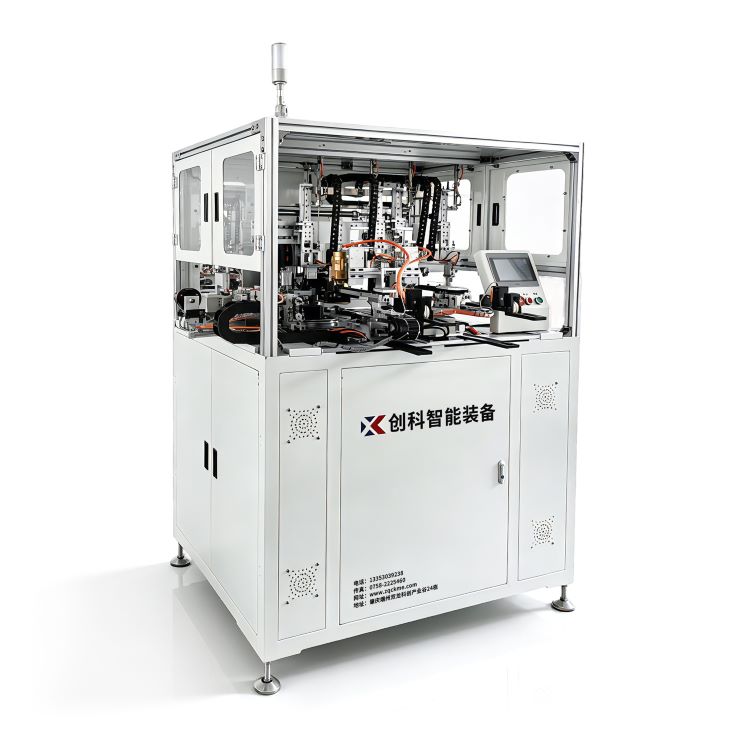
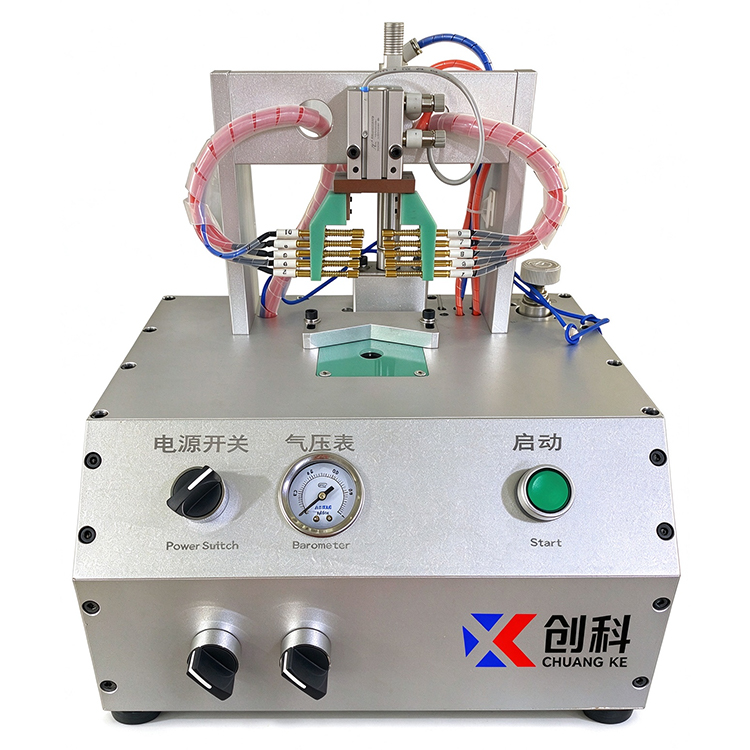
Zhaoqing Chuangke’s independently developed amorphous strip spot welder has a rated power of 100W, a compact size, low power consumption, adjustable output voltage, and support for multi-station welding. It can be used to manufacture magnetic cores and iron cores from amorphous and nanocrystalline strips, and it can also support flat welding of thin metal strips from 18μm to 45μm. It is suitable for conventional industrial environments with temperatures below 70℃ and humidity below 85%.
Testing and Sorting: Quantifying and Grading Performance Differences
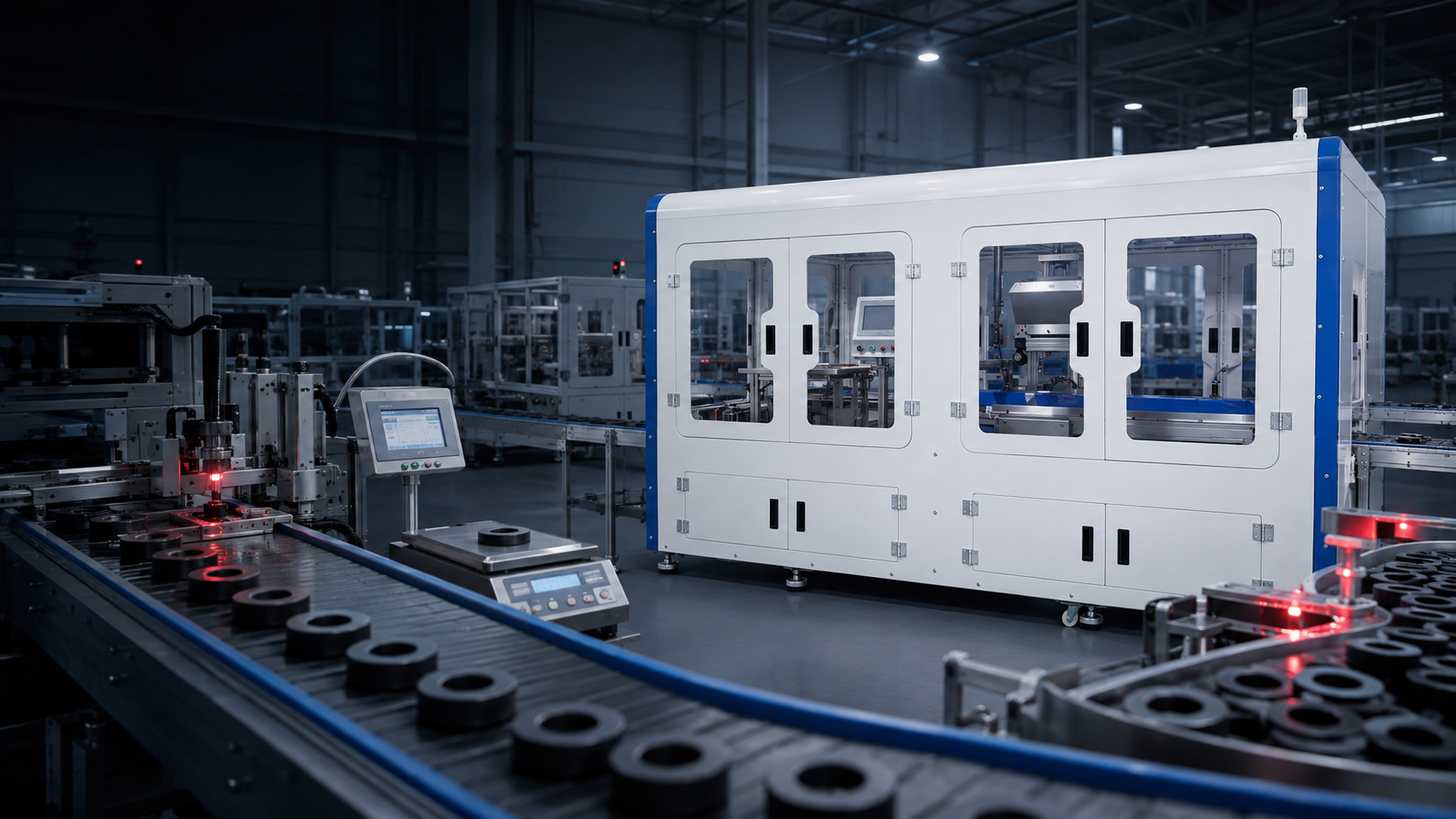
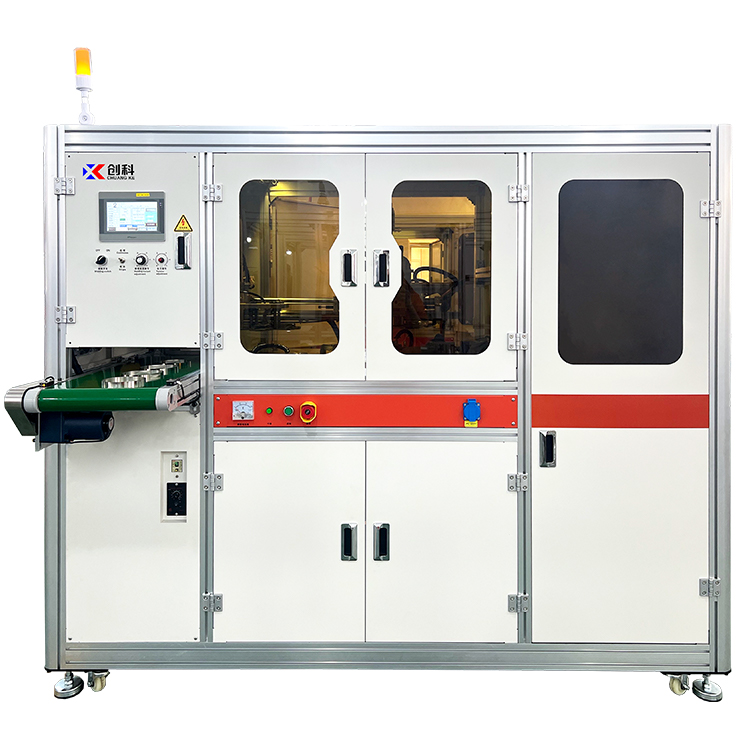
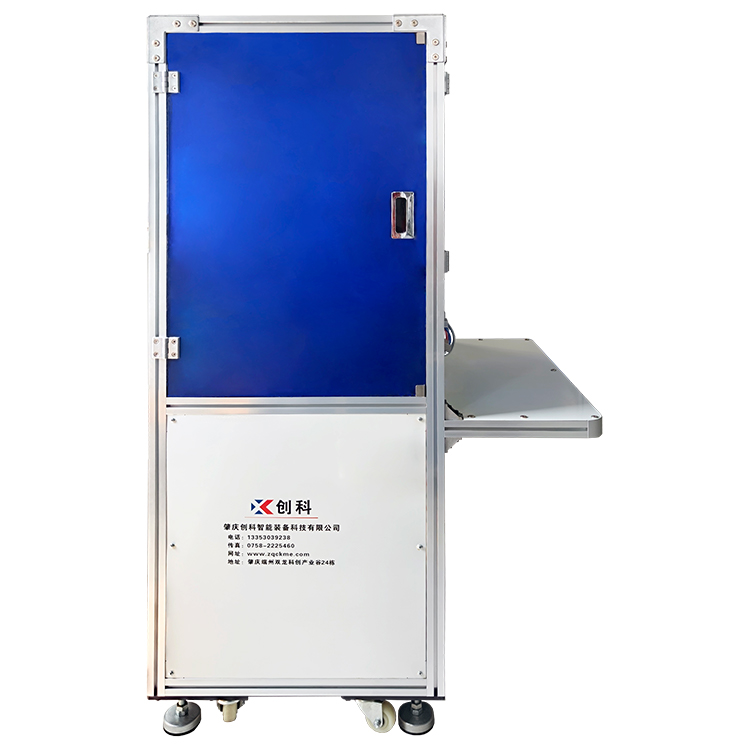
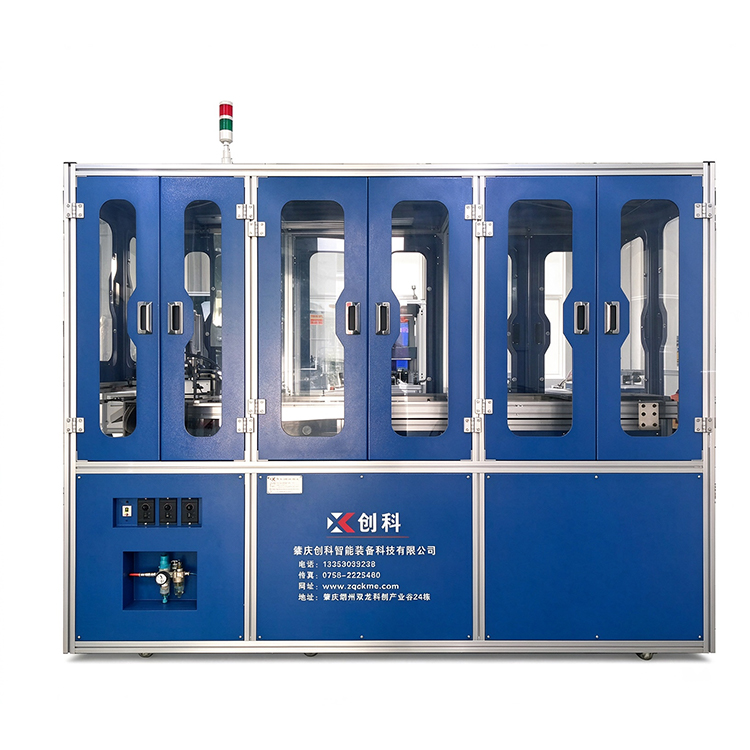
After welding, magnetic rings must undergo electrical performance testing and grading. Chuangke’s belt-type testing and sorting machine consists of conveyor-belt material storage, material guiding, a testing mechanism, a sorting and positioning mechanism, a testing and sorting instrument, and an intelligent control circuit. It can automatically arrange workpieces and deliver them one by one to the testing position. After test results are entered into the PLC, the sorting mechanism is driven to perform grading.
Equipment documentation shows that its sorting efficiency is approximately 30 to 45 pieces per minute, with speed appropriately reduced when magnetic-ring diameters are larger, and the system testing error is ≤1%. It can test and sort manganese-zinc, amorphous, ultra-microcrystalline, and nanocrystalline magnetic rings based on impedance, bias-current inductance, volt-ampere characteristics, and inductance.
The machine also features shutdown when the target count is reached, shutdown prompts for abnormal baselines or broken wires, touchscreen parameter setting, and fault alarms. Specification changes generally do not require fixture replacement, and weighing and laser marking can be added. Data-based functions help reduce mis-sorting, missed sorting, and counting errors.
Electrostatic Spraying: Front and Back Coatings Must Both Be Repeatable
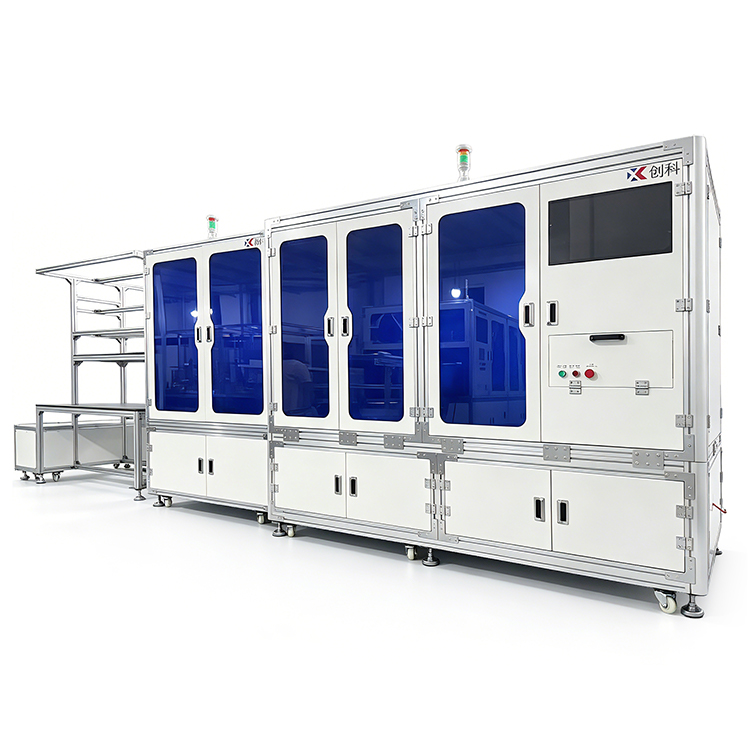
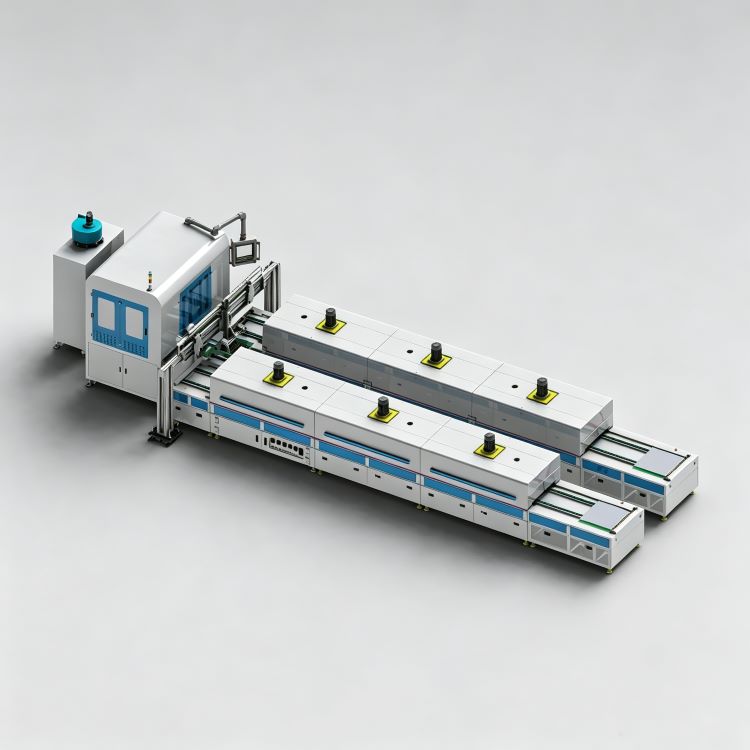
Powder coating of magnetic rings requires thickness control while also ensuring surface quality and front-to-back consistency. Chuangke’s rotary, dual-channel, and in-line electrostatic spraying machines all use HMI control and a dual-layer oven design. They can store multiple coating process recipes for ready recall, provide reserved standard interfaces for communication and networking with PLCs and other intelligent equipment, and offer factory-parameter restoration.
Taking the double-sided spraying process as an example, after workpieces complete loading, preheating, spraying, curing, and cooling, fixture mesh plates and cover plates are manually fitted, and the workpieces enter automatic plate flipping. During reverse-side processing, a robot removes the cover plates and fixture mesh plates, and after secondary heating, spraying, curing, and cooling, the parts are unloaded. The applicable coating thickness is 0.1mm to 0.5mm, and product colors can be changed.
Equipment documentation states that the coating line produces uniform thickness, a bright surface without pinholes, saves powder, and can be operated by one person. The dual-channel model also includes dust recovery and controls tunnel-oven temperature through the PRID algorithm. In batch production, recipe recall and oven-temperature control safeguard batch stability more effectively than simply pursuing speed.
Growth in the nanocrystalline magnetic core market creates a window for capacity expansion and upgrading, but high-end orders ultimately test process repeatability. Welding, testing, and spraying respectively guard the checkpoints for joining, performance, and surface quality. Only when equipment cycle times, parameters, and data are coordinated can consistency be delivered in every batch. Zhaoqing Chuangke is a national high-tech enterprise and ISO9001-certified. The company focuses on automated equipment for the entire amorphous new-energy industry chain and can develop equipment on demand and provide complete production solutions.
References
- Market Outlook: Global Nanocrystalline Magnetic Core Market CAGR to Reach 12.2% from 2026 to 2032 - Caifuhao, Eastmoney (2026-10-20)
- Zhiyan Consulting Releases Research Report on the Market Competition Landscape and Future Development Prospects of China’s Magnetic Components Industry: Five A-Share Samples Show “Diverging Prosperity and High-End Reshuffling” - Caifuhao, Eastmoney (2026-10-23)
Global Cooperation
Partner With Chuangke, Win Together
Tell us about your production challenges — our engineers will design a tailored automation solution, from single machines to complete Industry 4.0 lines.
Recommended Products
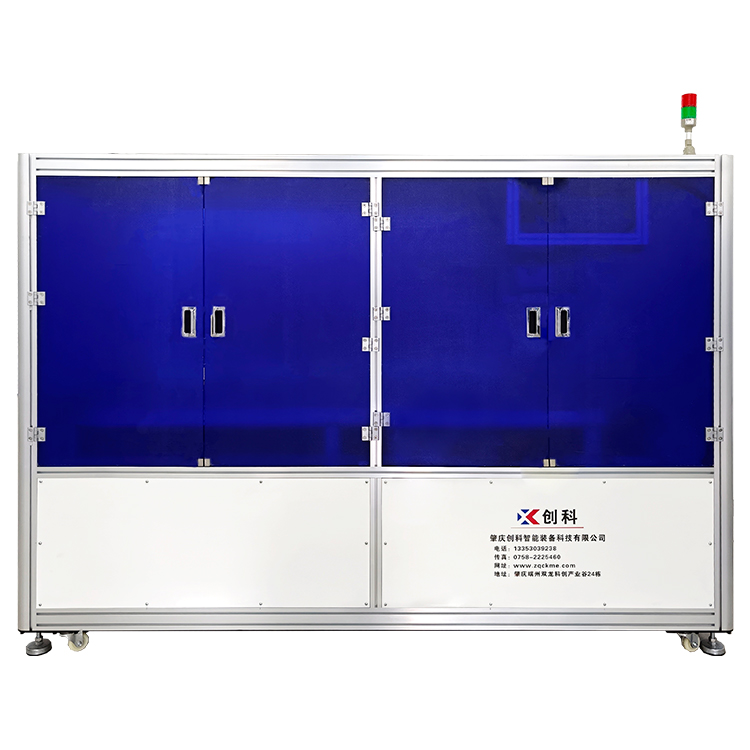 Magnetic Ring Testing Machine
Common-Mode Core Testing and Sorting Machine
This equipment is designed for common-mode cores and consists of a hopper structure, feeding structure, testing mechanism, sorting and positioning mechanism, testing and sorting instrument, intelligent control circuit, etc. The conveyor belt automatically arranges products in the same direction and then delivers them to the sorting and positioning mechanism, which uses a rotating motor to send products one by one to the testing position for testing. The test results are input into the PLC, which drives the sorting mechanism after processing to automatically grade the products and realize automatic sorting.
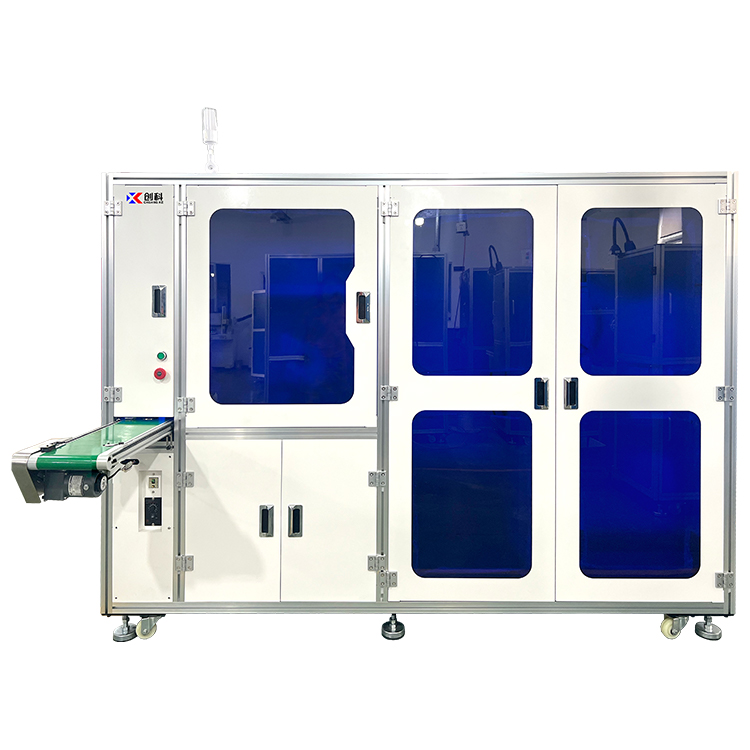 Iron Core Winding Machine
Horizontal/Planar Core Winding Machine
The Chuangke core winding machine is a high-speed, high-precision, intelligent, fully automatic winding device developed for precision cores. Its core electronic control components use original matching Panasonic Japan components, greatly improving operating stability, repeatability and durability, with an extremely low failure rate and a simple, reasonable structure. It realizes a fully automatic process of continuous strip feeding → automatic winding → outer diameter detection → automatic cutting → automatic inner/outer welding → intelligent weighing → automatic adjustment for nonconforming weight. It also integrates fault self-diagnosis, greatly reducing reliance on labor and effectively improving product consistency and production capacity.
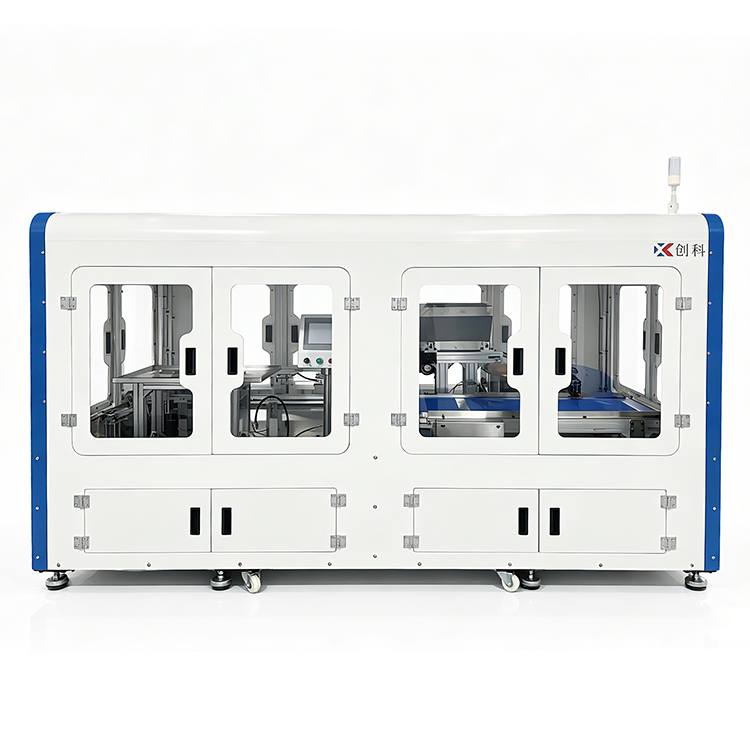 Magnetic Ring Testing Machine
Belt-Type Test Sorting Machine
It mainly consists of a conveyor-belt storage structure, a material-guiding structure, a testing mechanism, a sorting and positioning mechanism, a testing and sorting instrument, and an intelligent control circuit. The conveyor belt automatically arranges products in the same direction and then delivers them to the sorting and positioning mechanism, which uses a rotating motor to send the products one by one to the testing position for testing. The test results are input into the PLC. After processing, the PLC drives the sorting mechanism to automatically grade the products and realize automatic sorting.
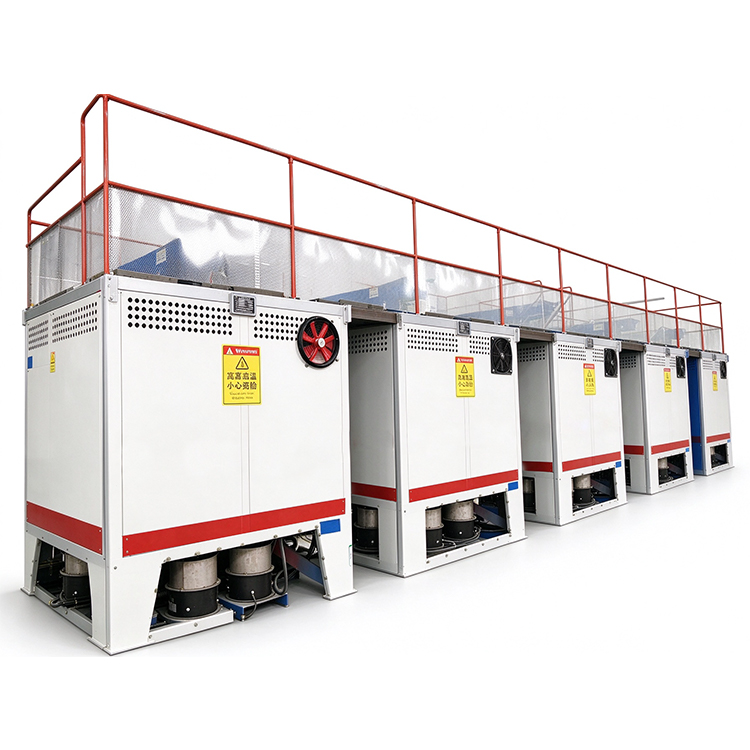 Annealing Furnace/Heat Treatment Furnace
1800GS Transverse Magnetic Field Annealing Furnace (111kW)
This equipment is a vertical batch-type transverse magnetic field vacuum annealing furnace designed specifically for annealing and transverse magnetic field heat treatment of nanocrystalline and amorphous common-mode and instrument transformer magnetic cores. It is an ultra-energy-saving heat treatment furnace that uses 20-30% less electricity than traditional electric furnaces. It adopts a vertical furnace body and hydraulically lifting furnace cover, and is equipped with a vacuum system, transverse magnetic field coils, and a three-zone heating system, with support for IoT remote monitoring. Its large loading fixture is suitable for large-batch heat treatment of magnetic cores.