





Magnetic Component Companies Step Up “Materials + Smart Manufacturing”: What Automation Support Does Flexible Capacity Expansion Need?
Recommended Blogs
- •HEVO Joins Purdue University to Advance Compatibility Verification of Static, Dynamic and Bidirectional EV Wireless Charging
- •Power capacity expansion in Bac Ninh, Vietnam brings opportunities for magnetic component automation upgrades
- •Würth Elektronik of Germany Launches WE-SLSP Compact Common-Mode Chokes; Small-Space Filtering Drives Precision Magnetic Core Manufacturing
- •Sumitomo Electric's Horizontally Recyclable Dust Core Wins SX Award; Low-Carbon Heat Treatment Draws Attention
- •Multi-Specification, Small-Batch Common-Mode Cores: A Flexible Dispensing and Cartoning Line Tackles Changeover Challenges
- •Looking at Magnetic Core Packaging Through Custom Automation in Apple’s Supply Chain: Visual Dispensing, Inline Inspection, and Flexible Changeover
- •High Growth in Nanocrystalline Magnetic Cores: As PV and Storage Volumes Rise, Equipment Must Prioritize Mass-Production Consistency
- •Amorphous Nanocrystalline Moves Toward High-Frequency New Energy: How Can Back-End Equipment Meet Demand?
- •Nanocrystalline Automotive Wireless Charging Efficiency Surpasses 98%; Iron Core Production Equipment Builds a Solid Foundation for Green Energy Efficiency
- •Implementing Overseas Automated Magnetic Component Production Lines: How to Adapt to Different Regional Production Standards?
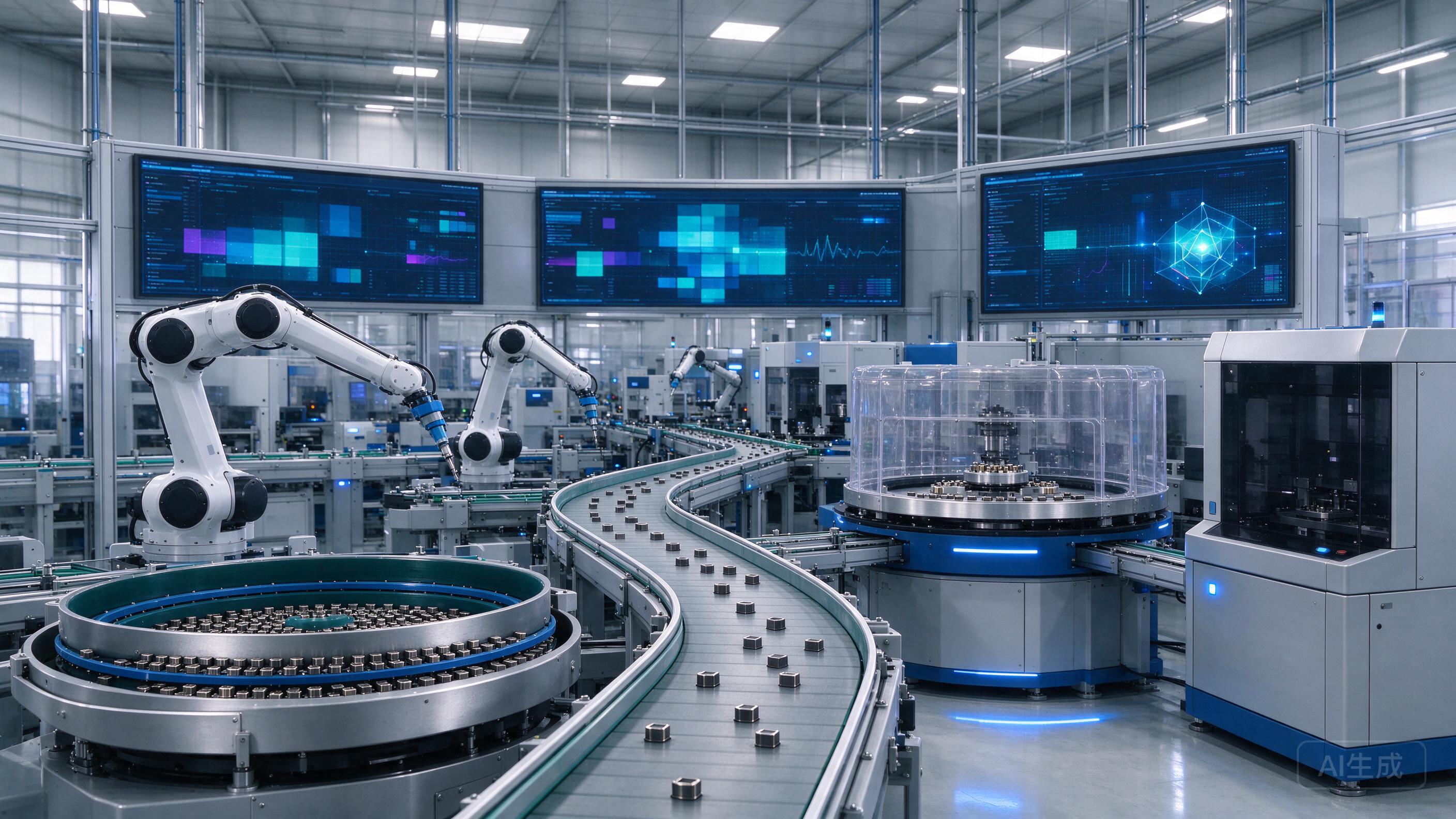
Magnetic component companies are stepping up their “materials + smart manufacturing” strategy. What kind of automation support does flexible capacity expansion require?
According to public industry information released on October 27, 2026, Zhongke Magnetics plans to raise no more than RMB 609 million to invest in a smart manufacturing project for high-performance rare-earth permanent magnet components used in new energy vehicle thermal management and robots. It will build smart production lines and a supporting full-process inspection and quality control center. Once fully operational, the project is expected to achieve an annual capacity of approximately 53 million sets. This is a microcosm of magnetic component companies strengthening their dual focus on “materials + smart manufacturing.” As downstream demand from new energy vehicles, robots and other sectors increases rapidly, industry capacity expansion has long moved beyond the scale-expansion model of adding equipment and labor. It now places systematic demands on production line flexibility, quality consistency, data traceability, and energy consumption management. Equipment manufacturers with deep expertise in magnetic component automation are matching flexible capacity expansion needs through full-process products and customized solutions.
Shift in Capacity Expansion Logic: From Scale First to Balancing Quality and Efficiency
In the past, capacity expansion in China’s magnetic component industry mostly revolved around large standardized orders, with production line design centered on increasing output for a single product category. It involved many manual processes, high changeover costs, and quality control based mainly on final sampling. The smart production lines invested in by Zhongke Magnetics this time directly target two high-end application scenarios: new energy vehicle thermal management and robots. Magnetic components in such scenarios generally feature high customization, fast specification iteration, and stringent reliability requirements. Automotive-grade applications also require full-batch production data traceability, making traditional production models unable to meet the demand.
At the industry level, magnetic component companies expanding capacity now generally need to balance three objectives: first, delivery efficiency for high-volume orders; second, flexible production-switching capability for multi-specification, small-batch customized orders; and third, reducing defect losses through full-process quality control and meeting downstream customers’ system audit requirements. This also means that equipment suppliers cannot merely provide standardized equipment for individual processes. They must deeply understand the process characteristics of magnetic material production and provide systematic solutions covering core processes and compatible with smart workshop architecture.
Quality Control Embedded in Processes: From Final Sampling to Full-Chain Management
The Zhongke Magnetics project specifically includes a full-process inspection and quality control center, reflecting the core demand for “front-loaded quality control” in high-end magnetic component production. If defective products are not discovered until they reach later processes or even customers, the cost will be far higher than that of in-process inspection.
Automation equipment can embed inspection into the production process through vision and sensing technologies. In the dispensing process, vision inspects adhesive shape and position, and defective products are directly removed. In assembly, performance testing interfaces are reserved for connection to inductance testing equipment to complete sorting. In heat treatment, parameters such as temperature and magnetic field are recorded throughout and associated with batches for traceability, meeting audit requirements for high-end products.
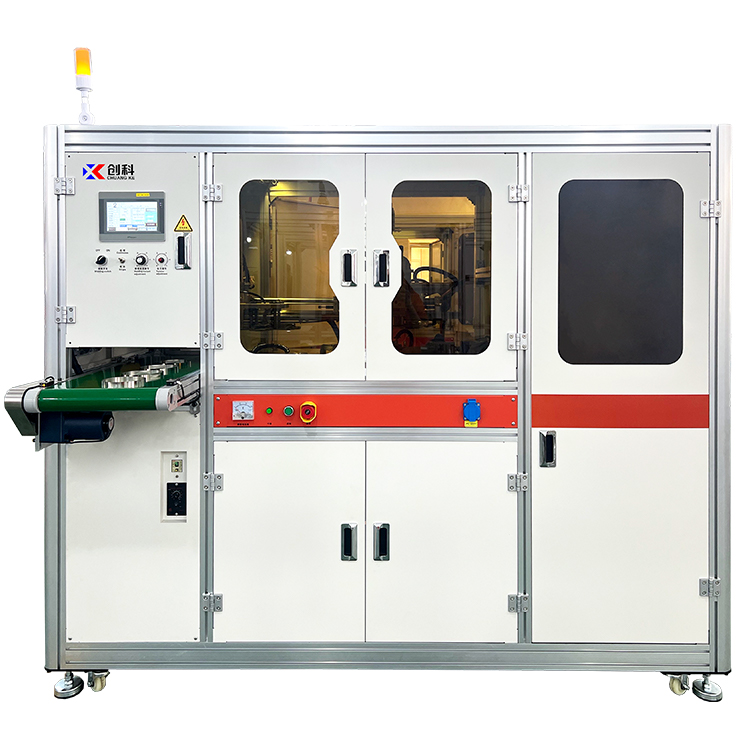
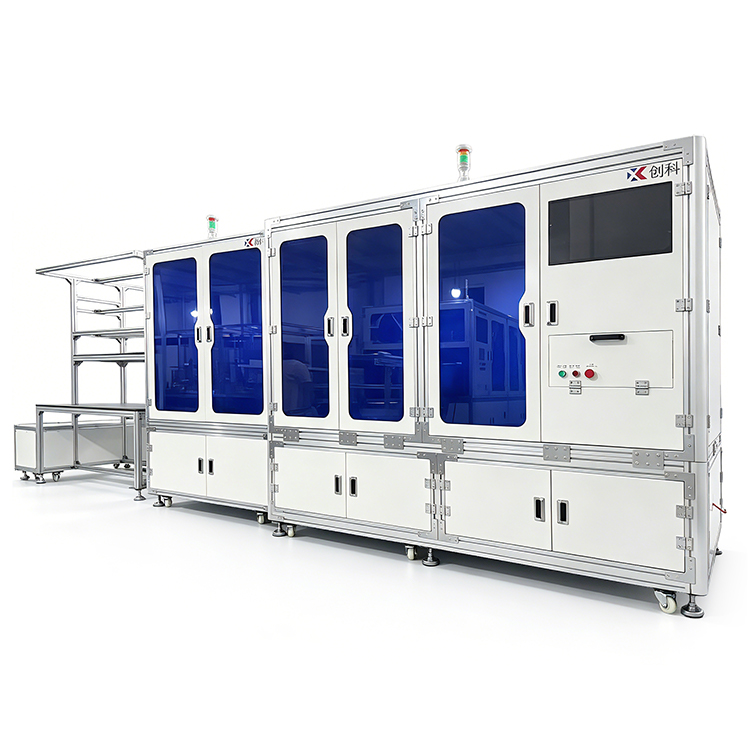
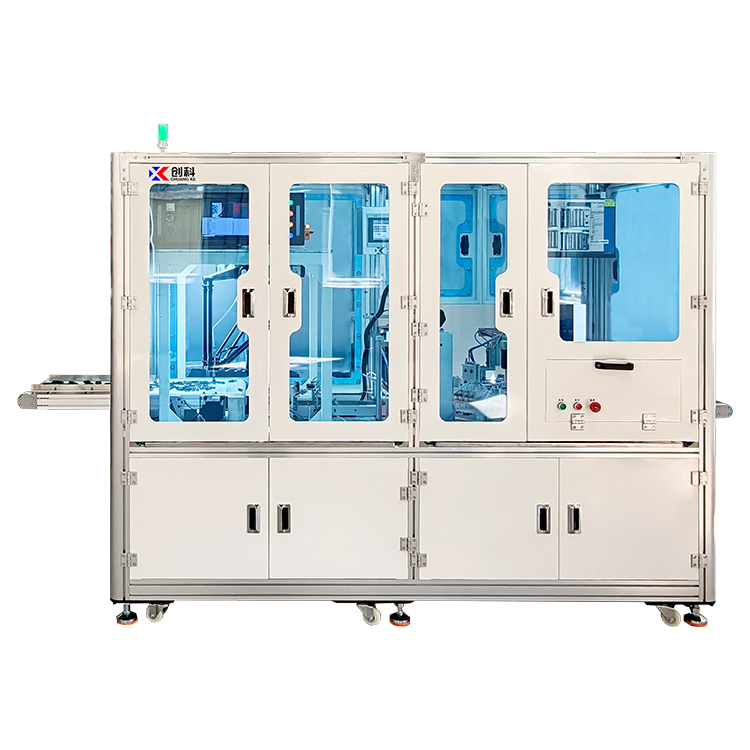
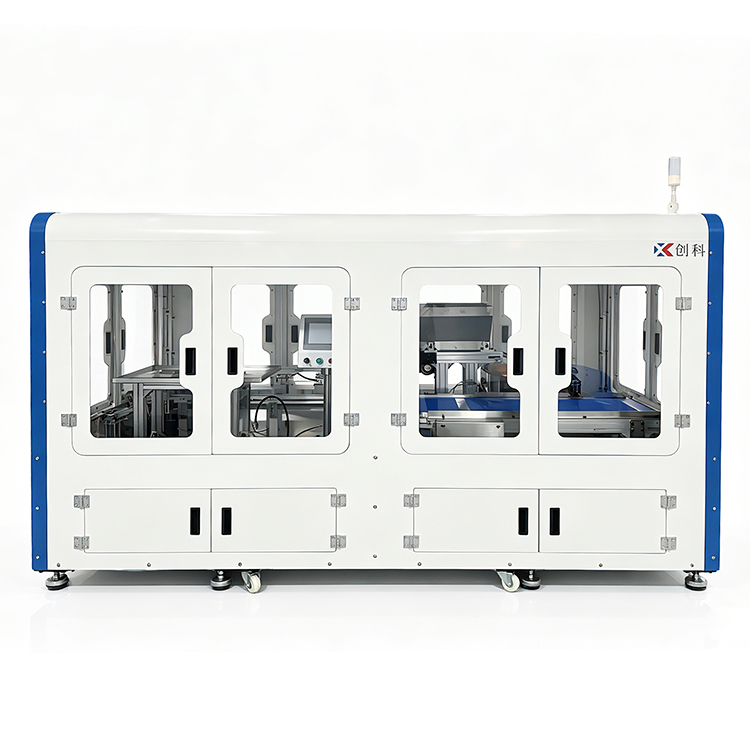
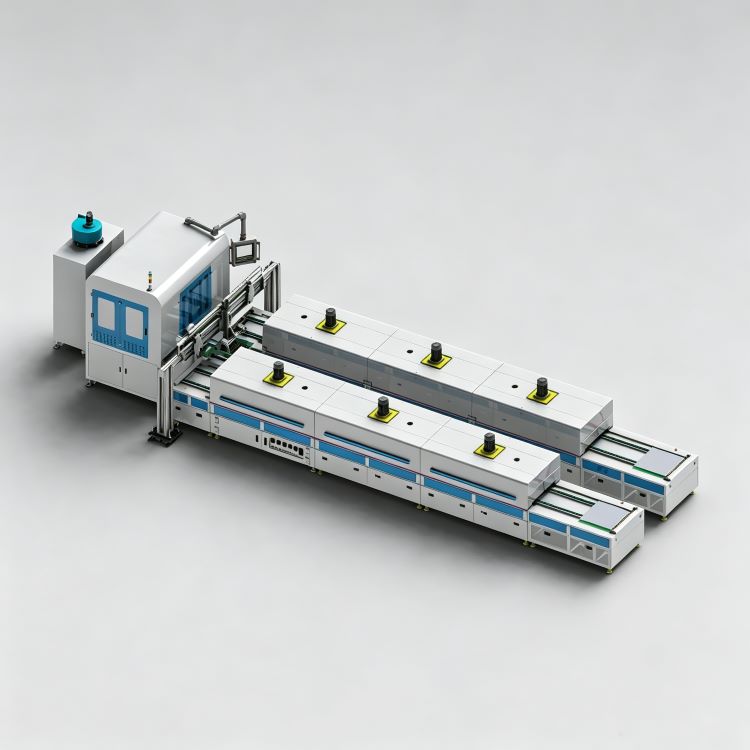
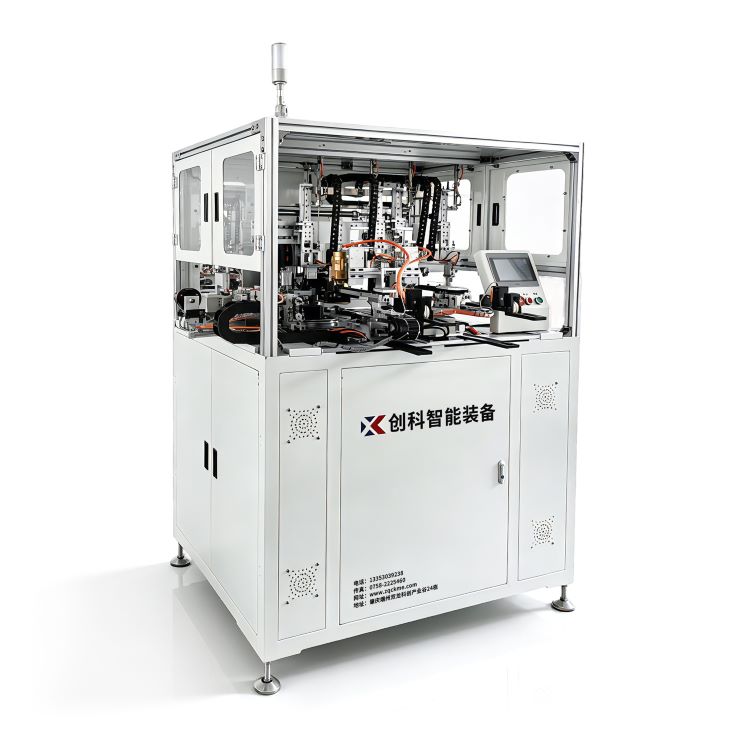
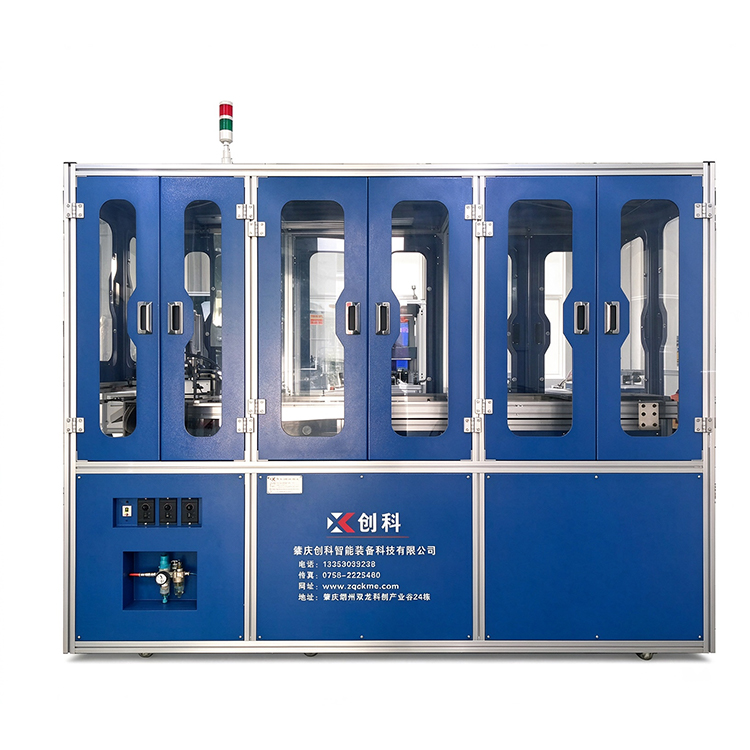
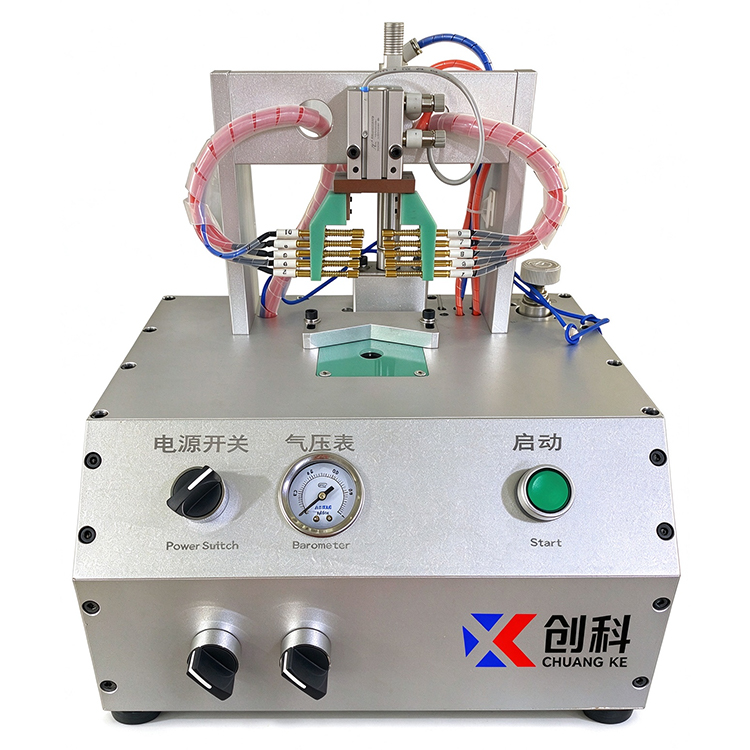
Chuangke’s flexible dispensing and box-loading machines and dispensing-box-loading-testing machines are all equipped with adhesive vision inspection, can automatically reject defective products, and reserve a single-turn performance testing station. Its 1800GS transverse magnetic field annealing furnace and nanocrystalline vacuum annealing furnace support batch number management and process data export, ensuring quality control data integrity from the process side.
Flexible and Rapid Changeover: Balancing Mass Delivery and Customization Needs
Magnetic components used in new energy vehicles and robots are mostly customized products. Different orders vary greatly in magnetic core dimensions, protective box specifications, and coating requirements. Companies often face both high-volume delivery and small-batch trial production needs simultaneously, so production line changeover efficiency directly affects delivery capability and production costs.
The core advantages of flexible equipment are reflected in three aspects: first, vision positioning and flexible feeding reduce dependence on customized tooling; second, process parameters can be stored and recalled, eliminating repeated debugging during changeovers; and third, hardware adjustments are convenient, allowing specification switching without large-scale modification.
Several Chuangke products have specialized designs for flexible production. Its iron-core protective-box vision dispensing machine features high-definition vision positioning, requires no complex tooling, and can save and recall programs with one click, adapting to round and racetrack-shaped magnetic core protective boxes with outer diameters of 20-130 mm. Its double-head protective-box dispensing machine was developed for multi-specification, small-batch demand and can be changed over simply by adjusting the vibratory bowl feeder track. Its series of electrostatic spray coating machines supports coating formula storage and can quickly adapt to different coating parameter requirements.
Data Interconnectivity: Adapting to Long-Term Smart Workshop Operations and Maintenance
As smart workshop construction becomes widespread, individual machines are no longer isolated production islands. Connecting data to factory management systems and supporting remote monitoring and control have become essential requirements in capacity expansion. At the same time, the energy consumption of high-energy processes such as heat treatment and coating directly affects companies’ production costs.
Magnetic component equipment adapted to smart workshops must reserve standard communication interfaces, support mainstream industrial protocols and remote alarms, and reduce operations and maintenance pressure, while lowering electricity and raw material consumption through structural and algorithm optimization.
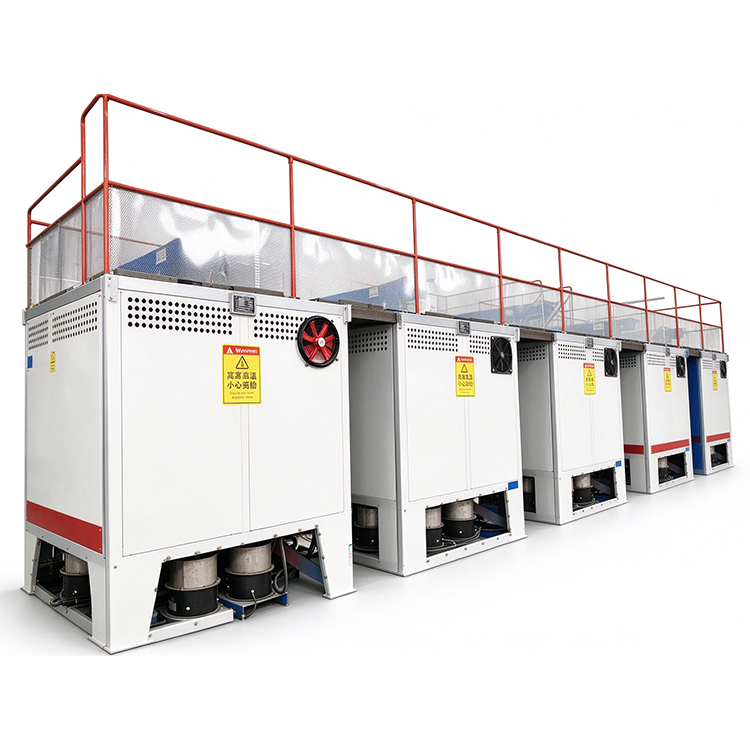
Chuangke’s 1800GS transverse magnetic field annealing furnace supports OPC-UA and Modbus TCP for connection to factory EMS systems, and production parameters can be read remotely via mobile phone or computer. Its energy-saving design reduces electricity use by 20%-30% compared with traditional electric furnaces. The nanocrystalline vacuum annealing furnace supports remote monitoring and data recording, has a complete temperature control program, and improves production efficiency by more than 30% compared with ordinary electric furnaces. Electrostatic coating equipment reserves communication interfaces, and some models have powder recovery functions that save powder coating. The entire line requires only one operator, reducing labor costs.
Whole-Line Customization Services: Matching Differentiated Capacity Expansion Paces
Magnetic component companies differ greatly in product mix and existing capacity foundations, so standard whole lines often cannot meet specialized process requirements. This requires equipment suppliers to have full-chain service capabilities ranging from R&D to whole-line design.
Chuangke is a national high-tech enterprise integrating R&D, production, and sales. It is ISO9001 certified and holds multiple patents, software copyrights, and high-tech products. The company has long focused on automation equipment for the entire amorphous new-energy industry chain, with products covering the full magnetic component production process. In recent years, it has also expanded into wireless charging automation equipment and entered the supply chains of Apple, Xiaomi, and Huawei, building cross-domain process expertise.
In addition to standardized equipment, Chuangke can customize equipment development and provide complete automation solutions according to customer needs. Some equipment supports operating systems in six languages and can adapt to overseas production scenarios.
The release of demand in high-end manufacturing is driving the magnetic component industry into an upgrade cycle, with the core of capacity expansion shifting from “increasing production capacity” to “enhancing core manufacturing competitiveness.” Only by deeply understanding material and process characteristics and matching customer needs with flexible, traceable, low-energy products and customized services can equipment suppliers truly become partners in magnetic component companies’ smart manufacturing upgrades and help China’s smart manufacturing take root.
References
Global Cooperation
Partner With Chuangke, Win Together
Tell us about your production challenges — our engineers will design a tailored automation solution, from single machines to complete Industry 4.0 lines.
Recommended Products
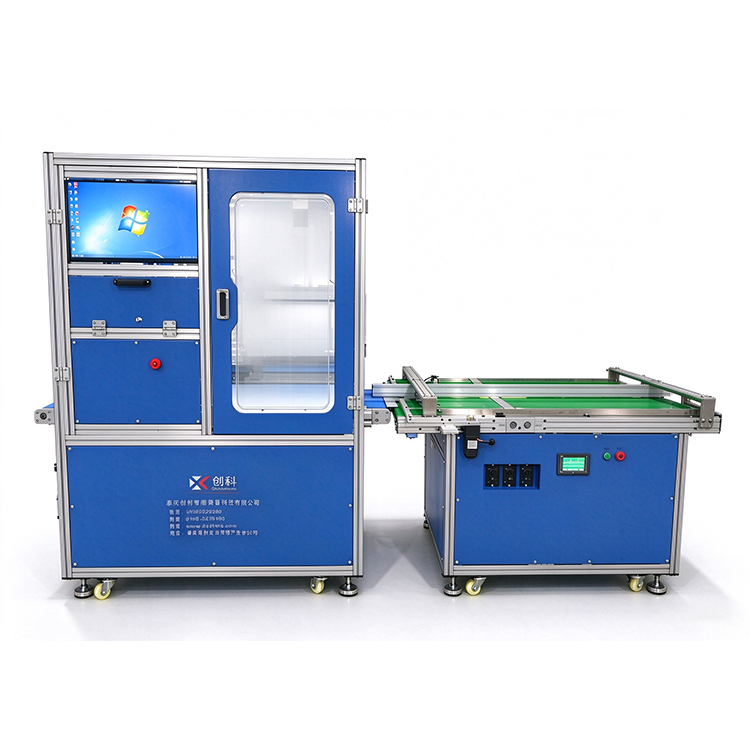 Dispensing Machine
Vision Glue Dispensing Machine for Iron Core Protective Cases
This equipment is a dedicated vision glue dispensing machine for amorphous iron core protective cases. It is suitable for dispensing the top and bottom covers of racetrack-shaped and circular amorphous/nanocrystalline magnetic core protective cases. Equipped with a high-definition vision camera positioning system, it supports multiple adhesive materials and multi-trajectory dispensing programming, can complete top and bottom cover dispensing simultaneously, and adapts to sealants with different viscosities. It is an optimal choice for automated dispensing in magnetic core packaging.
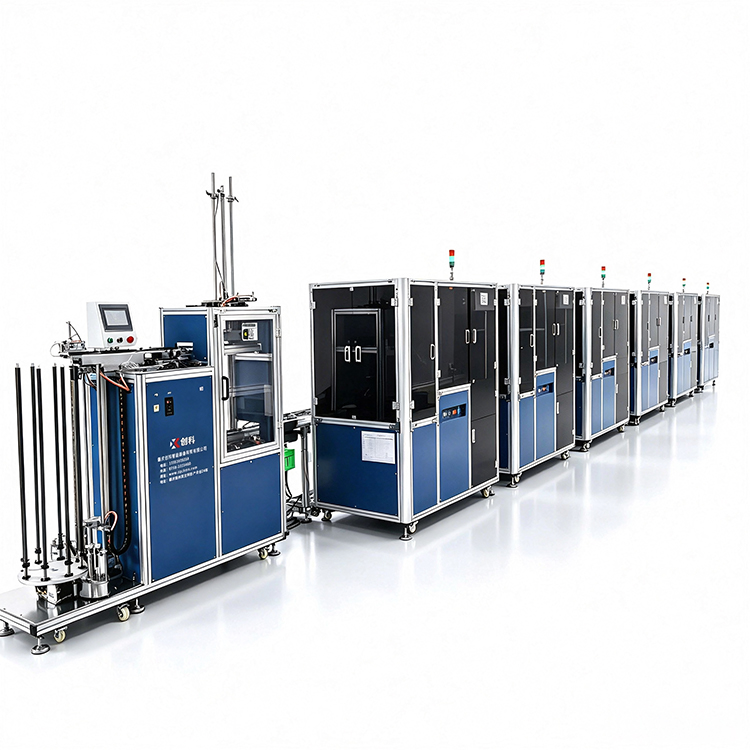 Iron Core Winding Machine
Iron Core Winding, Weighing and Rod Stringing Production Line
This integrated automatic amorphous iron core winding, weighing and rod-stringing production line is an iterative upgrade based on mature standalone-machine technology. It fully connects the iron core winding, automatic weighing and rod-stringing processes across the entire line. The complete pipeline can be operated by one person, saving labor and improving efficiency.
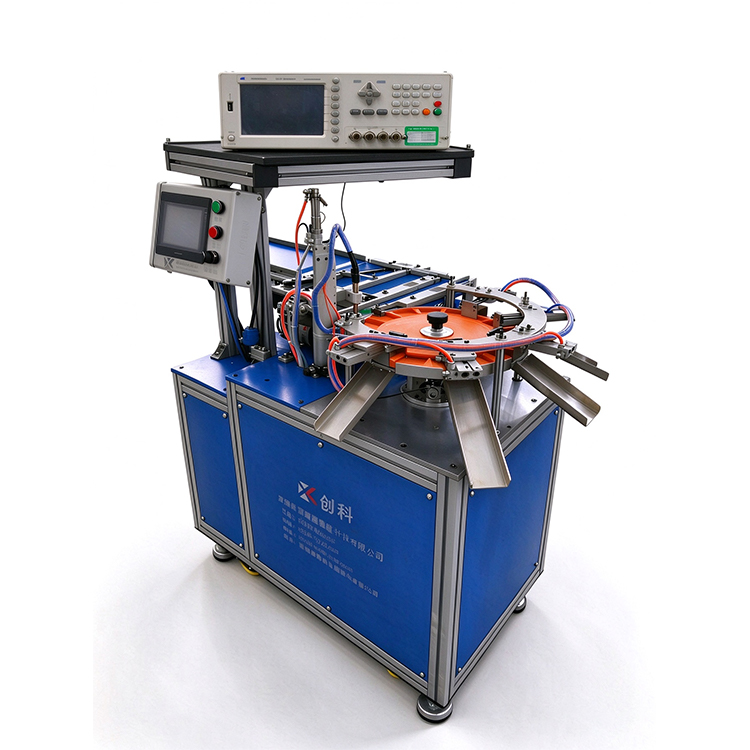 Magnetic Ring Testing Machine
Bare Core Test Sorting Machine
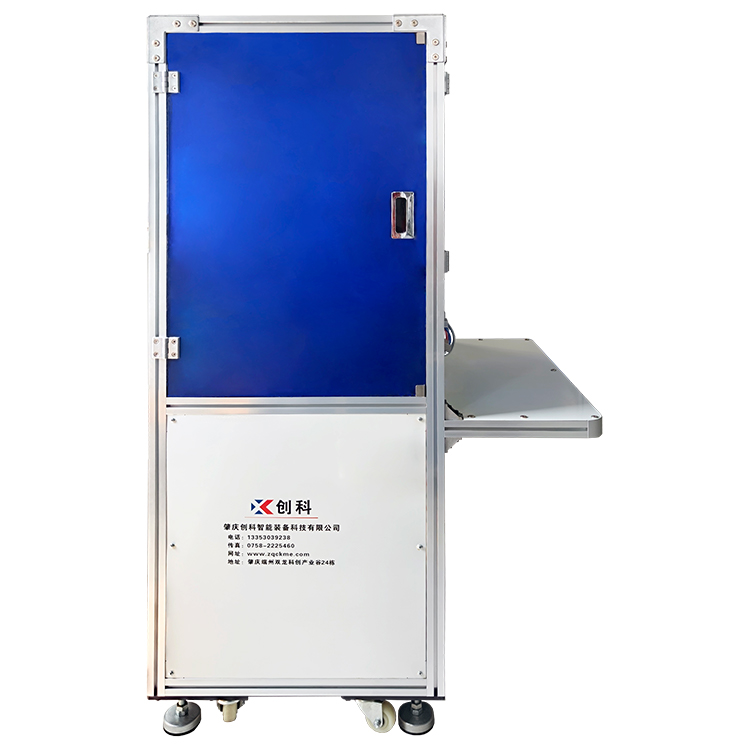
This equipment is developed for iron cores without protective cases and spray-coated iron cores, and solves the influence of turntable centrifugal force on product performance. It consists of a flat conveying structure, testing mechanism, sorting and positioning mechanism, test sorting instrument, intelligent control circuit, etc. The conveyor belt automatically arranges products in the same direction and then delivers them to the sorting and positioning mechanism, which uses a rotating motor to send products one by one to the testing position for testing. The test results are input to the PLC; after processing, the PLC drives the sorting mechanism to automatically classify the products, realizing automatic sorting.
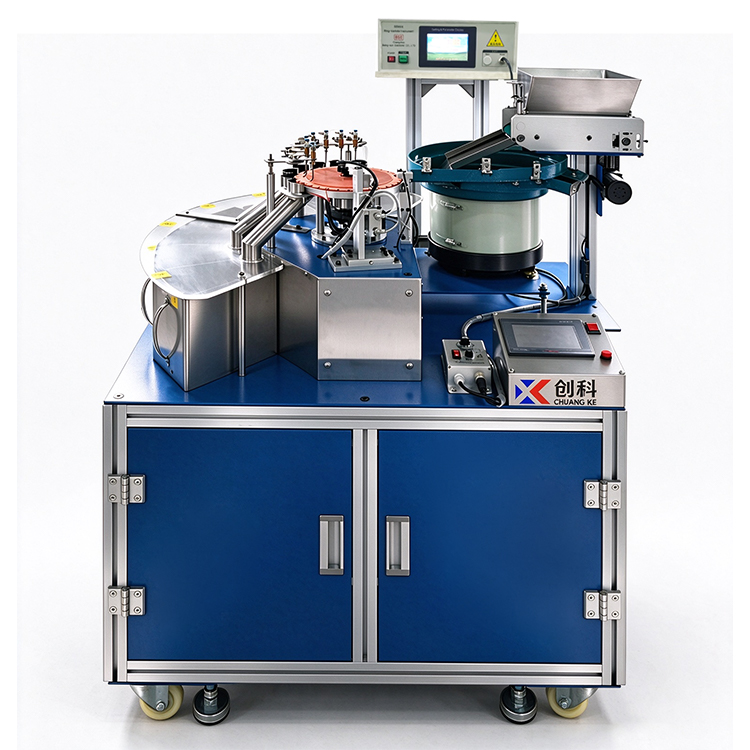 Magnetic Ring Testing Machine
Small Magnetic Bead Chip Testing and Sorting Machine
This machine is a fully automatic small-component testing and sorting device. It can automatically complete inspection and grading of small components such as magnetic beads and thermistors/varistors. It runs reliably and is easy to operate, making it suitable for quality inspection and sorting in mass production.