




Multi-Specification, Small-Batch Common-Mode Cores: A Flexible Dispensing and Cartoning Line Tackles Changeover Challenges
Recommended Blogs
- •HEVO Joins Purdue University to Advance Compatibility Verification of Static, Dynamic and Bidirectional EV Wireless Charging
- •Power capacity expansion in Bac Ninh, Vietnam brings opportunities for magnetic component automation upgrades
- •Würth Elektronik of Germany Launches WE-SLSP Compact Common-Mode Chokes; Small-Space Filtering Drives Precision Magnetic Core Manufacturing
- •Sumitomo Electric's Horizontally Recyclable Dust Core Wins SX Award; Low-Carbon Heat Treatment Draws Attention
- •Looking at Magnetic Core Packaging Through Custom Automation in Apple’s Supply Chain: Visual Dispensing, Inline Inspection, and Flexible Changeover
- •Magnetic Component Companies Step Up “Materials + Smart Manufacturing”: What Automation Support Does Flexible Capacity Expansion Need?
- •High Growth in Nanocrystalline Magnetic Cores: As PV and Storage Volumes Rise, Equipment Must Prioritize Mass-Production Consistency
- •Amorphous Nanocrystalline Moves Toward High-Frequency New Energy: How Can Back-End Equipment Meet Demand?
- •Nanocrystalline Automotive Wireless Charging Efficiency Surpasses 98%; Iron Core Production Equipment Builds a Solid Foundation for Green Energy Efficiency
- •Implementing Overseas Automated Magnetic Component Production Lines: How to Adapt to Different Regional Production Standards?
For multi-specification, small-batch common-mode cores, how a flexible dispensing and cartoning line addresses changeover challenges
In downstream scenarios such as consumer electronics, industrial power supplies, and automotive electronics, the materials, dimensions, and protective-case structures of common-mode cores often vary with customer products. Public reports from the magnetic components industry note that end demand is highly customized, with almost no two transformers exactly alike. Another industry analysis also points out that different applications have different requirements for cores, while process consistency and large-scale manufacturing remain challenges. Zhaoqing Chuangke Intelligent Equipment Technology Co., Ltd. has long focused on automated equipment for amorphous and nanocrystalline cores. For the back-end stages of dispensing, cartoning, pressing, and testing, it has built a product portfolio including a protective-case dual-head dispensing machine, a flexible dispensing and cartoning machine, and a dispensing, cartoning and testing machine. Starting from the practical pain points of frequent changeovers and small-batch production, this article analyzes how flexible automation solutions help manufacturers balance quality stability with production-line adaptability.
Customization becomes the norm, and back-end assembly cannot rely solely on manual labor to fill the gap
Reports related to industry supply-demand matchmaking show that matching magnetic component technology often requires discussion of core materials, winding processes, manufacturability, supplier audits, and other factors; the products are not standardized general-purpose parts. Market analysis articles also note that consumer electronics, industrial power supplies, and automotive electronics impose different performance requirements on cores, driving core products toward greater specialization and customization. This means common-mode core manufacturers frequently face specification switches, batch changes, and delivery pressure.
The manufacture of amorphous and nanocrystalline cores itself includes front-end processes such as winding and heat treatment before moving into back-end protective-case dispensing, assembly, and inspection. Patent documents show that amorphous alloy strips must be wound and heat-treated to form nanocrystalline cores. Coordination among front- and back-end process parameters, specifications, and batches means that back-end assembly cannot be viewed in isolation. If the front end is already organized for multi-specification production while the back end still uses fixed, manual operations, it can easily become a bottleneck for changeover efficiency and quality stability.
Three pain points of traditional dispensing and cartoning: adhesive volume, orientation, and changeover
A common problem with manual dispensing is that adhesive consistency is affected by operator experience, shift conditions, and operating techniques. If the bottom case and top cover are dispensed separately by hand, issues such as too much or too little adhesive, missing adhesive, stringing defects, and offset dispensing paths may occur; adhesive overflow can also affect core assembly and appearance. Manual cartoning relies on operators to identify the orientation of protective cases and cores. During alternating small-batch, multi-specification production, the risks of wrong assembly, reverse assembly, and missed inspection are amplified.
Changeover is also a hidden cost. The more specifications there are, the more often tracks must be adjusted, fixtures replaced, dispensing parameters confirmed, first-article checks performed, and operators retrained. If equipment can handle only a single product, or if parameters cannot be saved and recalled, production floors often spend considerable setup time on orders with small quantities but frequent model changes. What industry analyses call the challenge of large-scale manufacturing, when it reaches the back-end workshop, is often the difficult balance among takt time, consistency, and quick changeover.
Flexible feeding plus vision positioning first brings feeding and orientation under control
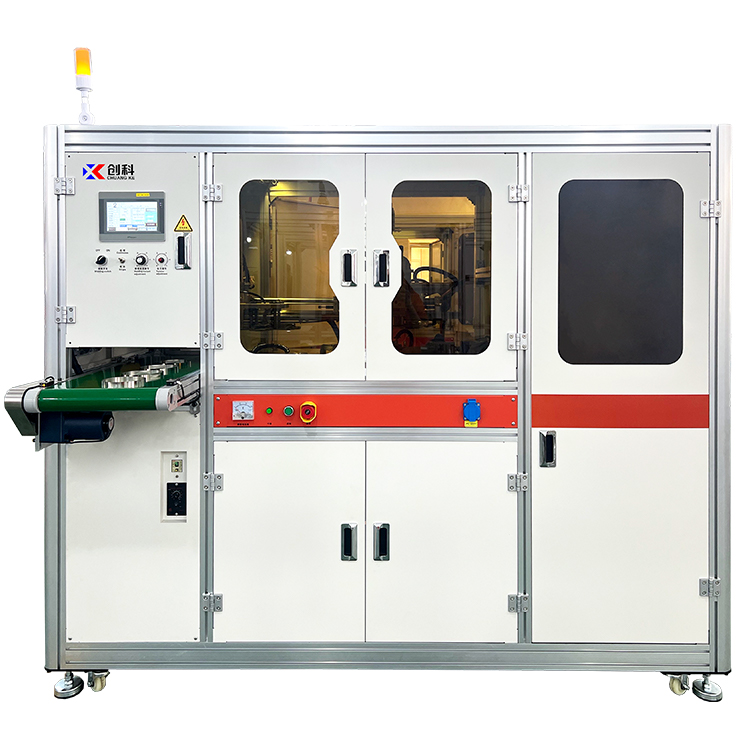
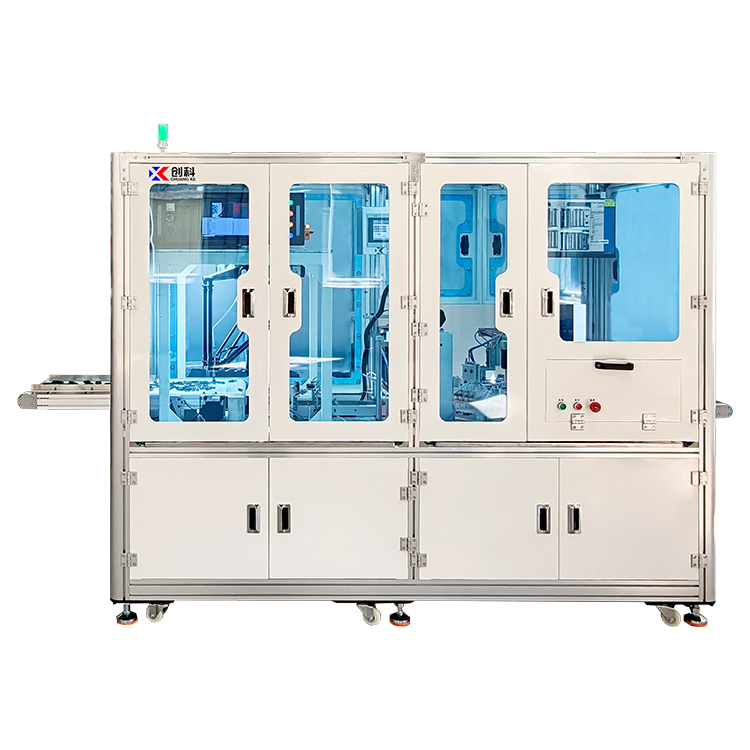
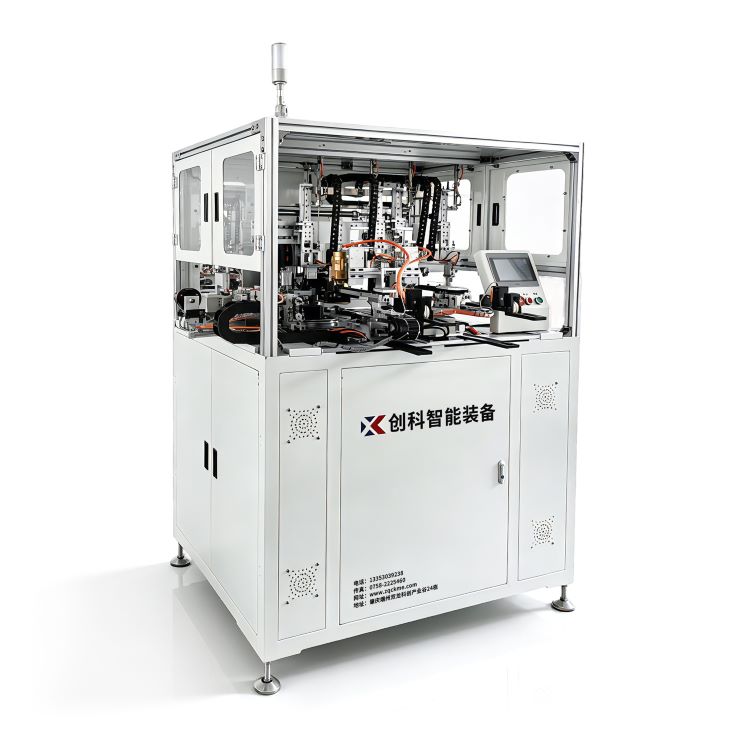
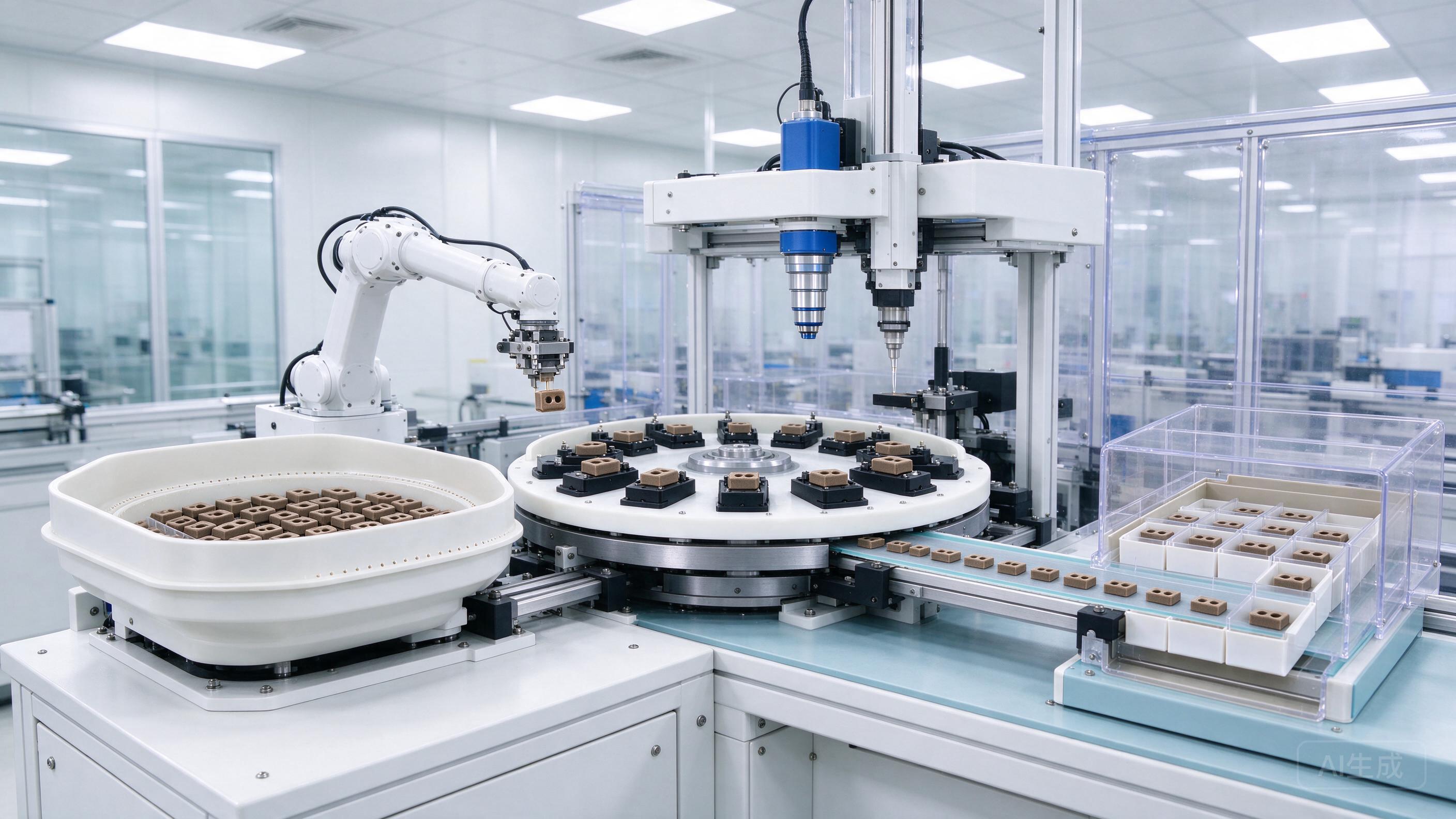
Chuangke’s flexible dispensing and cartoning machine is designed for integrated automatic dispensing, assembly, pressing, and cover sealing of common-mode cores, plastic bottom cases, and top covers. Bottom cases and top covers are automatically fed using flexible vibratory bowl feeders together with robotic arms, while vision positioning identifies their front and back sides. It is suitable for common-mode cores and ring-shaped protective-case products. Compared with relying solely on fixed tracks and manual judgment, flexible feeding is better suited to workpieces with similar appearances but different specifications and can reduce wrong assembly caused by manual orientation.
The value of vision capability is not limited to feeding. After the bottom case and top cover have been independently dispensed, the equipment visually inspects the adhesive, and products with defective adhesive can be automatically discharged and rejected. In this way, quality control shifts forward from finding problems in finished products to intercepting problems during assembly, preventing workpieces with defective adhesive from continuing into core assembly and pressing, and reducing downstream rework and material waste.
Dual-position dispensing and rotary multi-station design build consistency into the process
A common-mode core protective case usually involves two dispensing positions: the bottom case and the top cover. The flexible dispensing and cartoning machine uses dual-position dispensing to dispense the bottom case and top cover independently. It supports both multi-point dispensing and circular-path dispensing modes and is compatible with two adhesive types: silicone and silicone grease. For common-mode core assemblies with protective-case heights of 8 to 30 mm, inner diameters of 8 to 30 mm, and a maximum outer diameter of 45 mm, back-end assembly can be completed through adaptation of equipment parameters and fixtures.
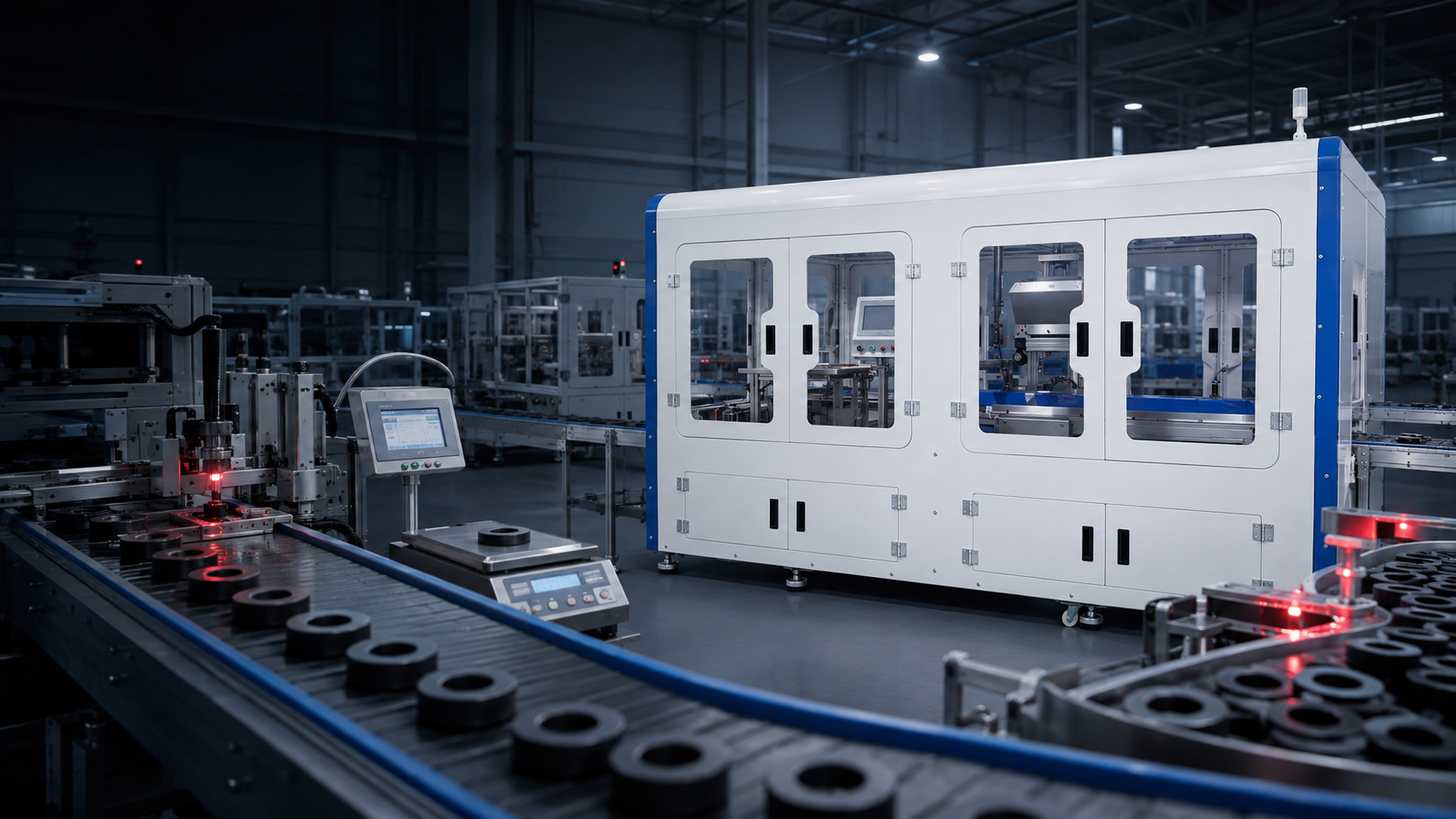
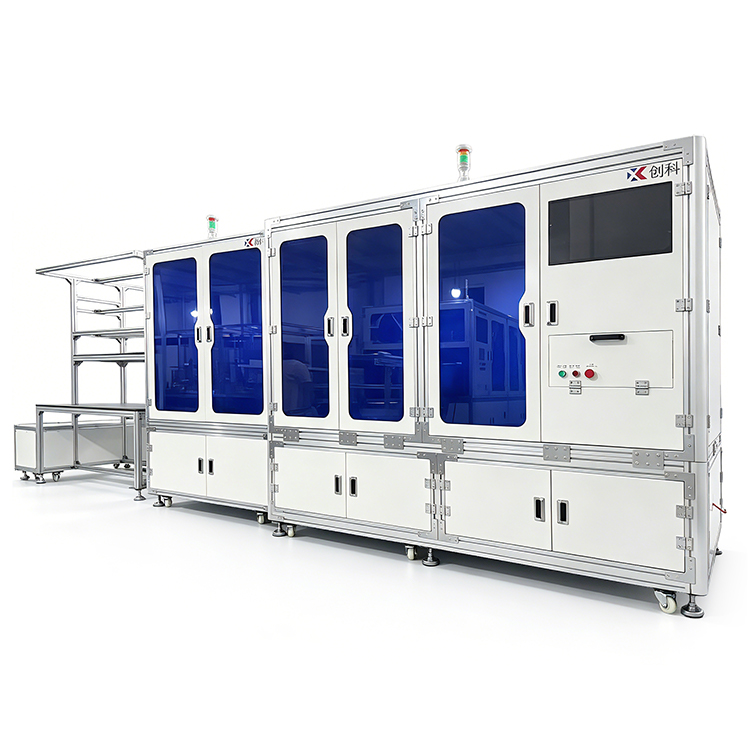
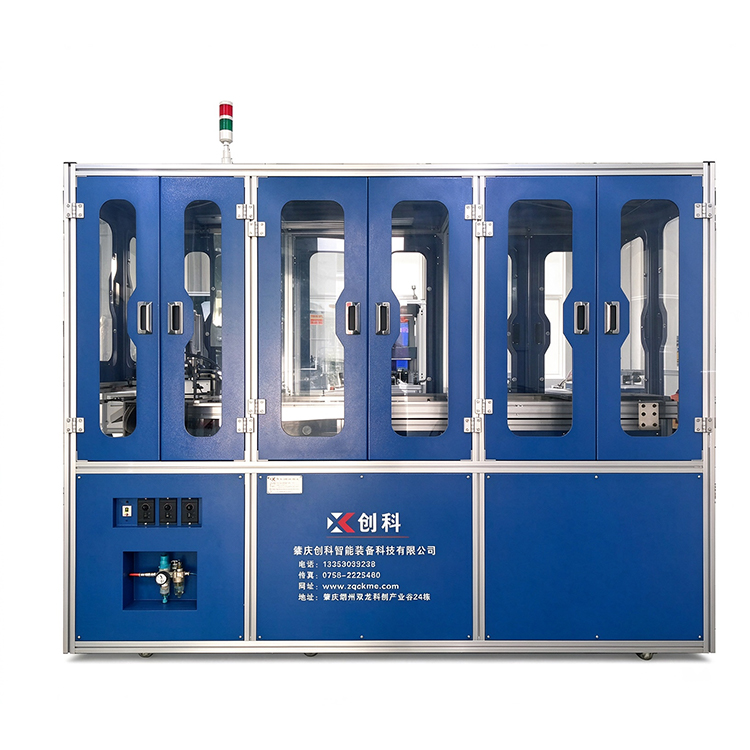
The equipment transfers workpieces with rotary fixtures and simultaneously completes dispensing, assembly, pressing, and inspection at multiple stations, making the process takt more compact. The control system uses a PLC and touchscreen; parameters can be adjusted on the HMI, and password-protected operation permissions are provided. When a fault occurs, relevant information can be displayed. The machine is configured with protective guards and blue transparent acrylic shielding doors, and loading and unloading use conveyor belts, combining automated processes with workshop safety protection.
Choose according to batch and process stage: standalone dispensing, integrated cartoning, or inline testing
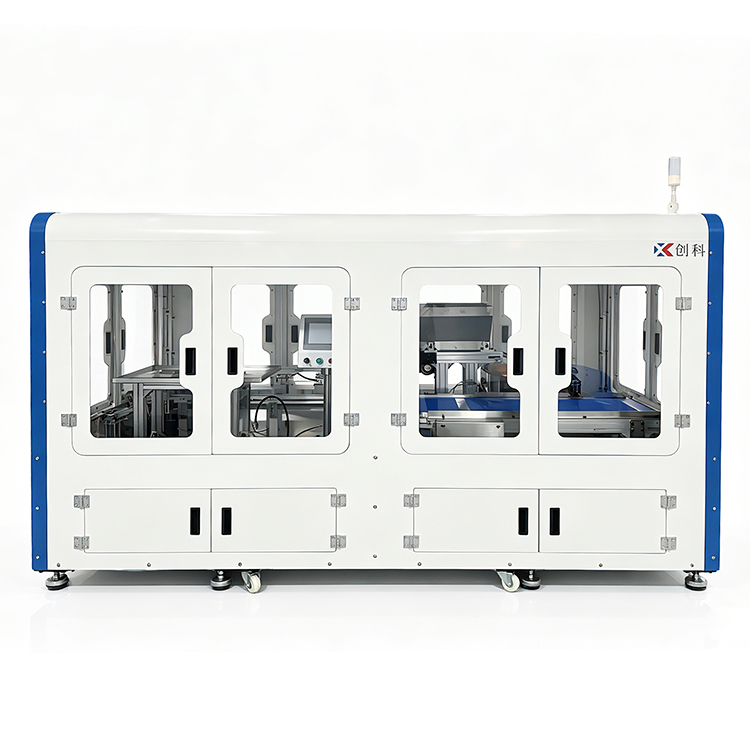
For scenarios with many amorphous core specifications and small-batch production, Chuangke’s protective-case dual-head dispensing machine emphasizes simple specification changes: processing specifications can be switched by adjusting the vibratory bowl track. The equipment supports automatic adhesive supply, freely configurable dispensing point counts, dispensing and automatic string breaking, and adjustable adhesive volume and dispensing modes, including dispensing a full circle. Adhesive capacity supports 260 mL or 2.6 L, and the dispensing station can be selected as single-station or dual-station. According to the materials, its processing speed is approximately 30 to 60 pieces per minute, varying depending on product specifications, dispensing parameters, and adhesive type.
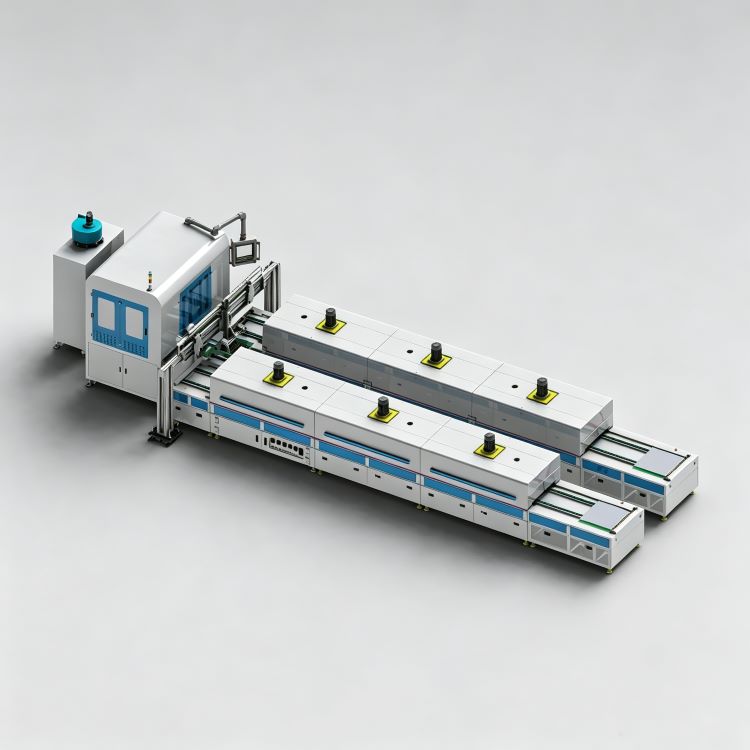
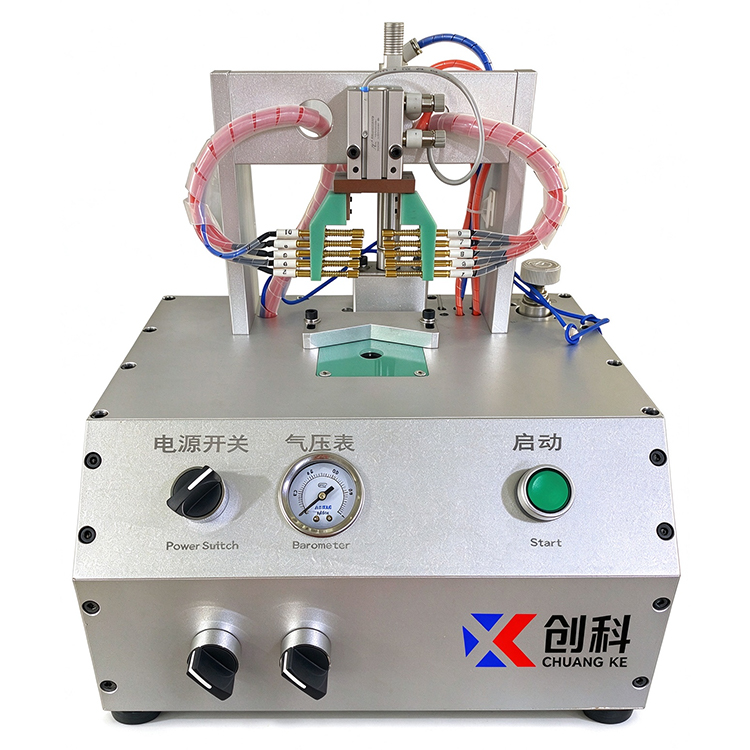
If a company wants to reduce work-in-progress handling between dispensing and cartoning, it can choose the flexible dispensing and cartoning machine, which links bottom-case dispensing, robotic core loading, top-cover dispensing, top-cover cartoning and pressing, and finished-product discharge into one continuous flow. The equipment also reserves a single-turn performance testing station, supports connection to the customer’s inductance tester, and can be configured with three test levels, making it easier to expand performance inspection in the future.
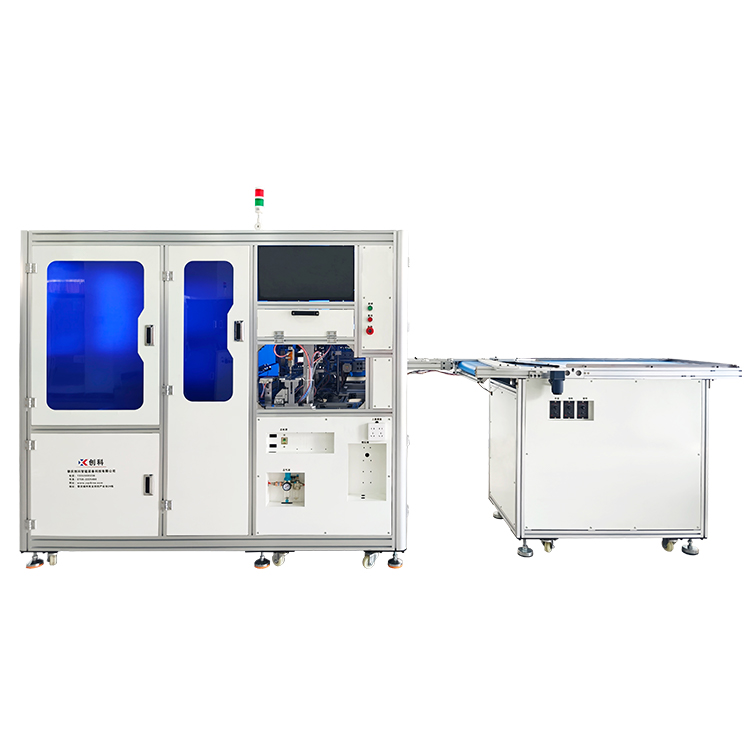
For round core products that need to incorporate test sorting into the automated process, the dispensing, cartoning and testing machine is available. It likewise features dual-position dispensing for bottom cases and top covers, visual adhesive inspection, rotary multi-station transfer, and press assembly. It also reserves a single-turn performance testing interface; after connecting an external customer-supplied inductance tester, four test levels can be configured. According to the materials, the equipment uses 220 V utility power and an air source of no less than 0.6 MPa, occupies approximately 3.3 × 2.2 m, is about 2 m high, and matches a capacity requirement of 800 to 1,200 pieces per hour. It is suitable for electronic component manufacturers with automation-upgrade needs to evaluate based on their own workpieces and output.
Competition involving multi-specification, small-batch common-mode cores is not only a competition over materials and front-end processes, but also over the flexibility of back-end assembly. Chuangke’s equipment portfolio—from flexible feeding, vision positioning, and dual-position dispensing to parallel rotary assembly, defect rejection, and reserved testing interfaces—seeks to resolve the contradiction between frequent changeovers and consistent quality. When selecting equipment, companies can choose standalone dispensing, integrated cartoning, or an automated solution with testing based on protective-case dimensions, adhesive type, batch size, whether performance test grading is required, and on-site conditions such as floor space and air supply. Through trial runs and process validation, they can then gradually improve the stability and traceability of their back-end production lines.
References
- Magnetic Components Industry Chain Supply-Demand Matchmaking Meeting: An Industry Mechanism for “Putting Needs into Words”(2026-10-14)
- Global Common-Mode Inductor Core Market: Growth and Application Trends from 2026 to 2032(2026-10-22)
- An Invention Patent for a Heat Treatment Method for Preparing Nanocrystalline Cores(2026-10-25)
Global Cooperation
Partner With Chuangke, Win Together
Tell us about your production challenges — our engineers will design a tailored automation solution, from single machines to complete Industry 4.0 lines.
Recommended Products
 Annealing Furnace/Heat Treatment Furnace
Nanocrystalline Vacuum Annealing Furnace (67kW & 90kW)
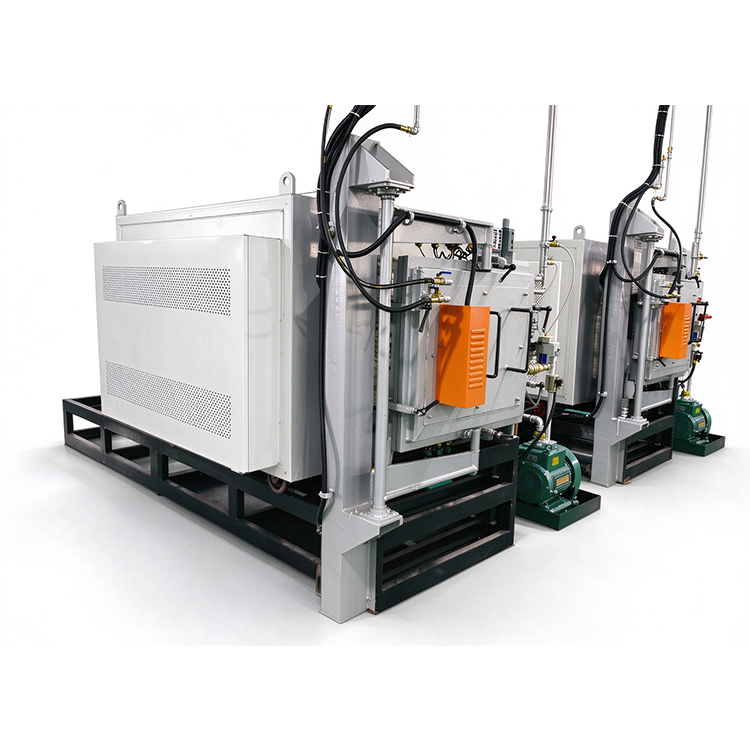
Dedicated vacuum annealing equipment for instrument transformer cores, mainly used for annealing amorphous and nanocrystalline cores. Compared with ordinary electric furnaces, it improves production efficiency by more than 30%. The equipment consists of a heating furnace body, stainless steel muffle tank, electrical control system, vacuum pump and valve system, and protective atmosphere device. It uses a PLC + temperature control module + touchscreen to realize automatic operation throughout the process; only manual loading and unloading of workpieces is required. It meets the heat treatment process requirements of nanocrystalline products and features energy savings, high automation, accurate temperature control, and IoT remote monitoring support.
 Iron Core Cartoning Machine
Dispensing, Cartoning & Testing Machine
Used for circular iron core products, bottom boxes and top covers to complete integrated automatic glue dispensing, magnetic core assembly, pressing, capping and testing.
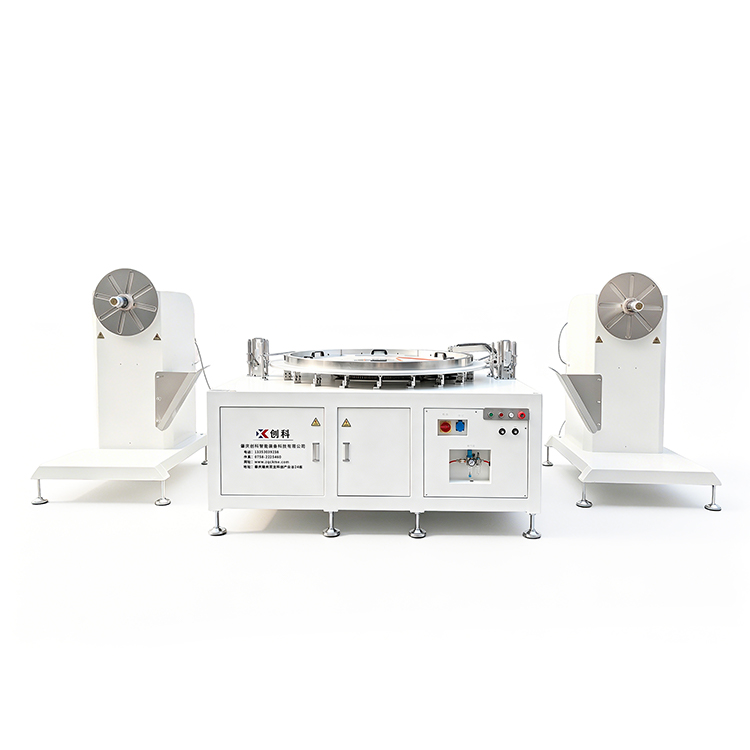 Iron Core Winding Machine
1000 Semi-Automatic Horizontal Iron Core Winding Machine
The Chuangke semi-automatic iron core winding machine is a high-speed, high-precision, intelligent winding device developed for precision iron cores. The equipment’s operational stability, repeatability and durability are greatly improved, with an extremely low failure rate and a simple, reasonable structure. It integrates fault self-diagnosis, greatly reducing reliance on labor and effectively improving product consistency and production capacity.
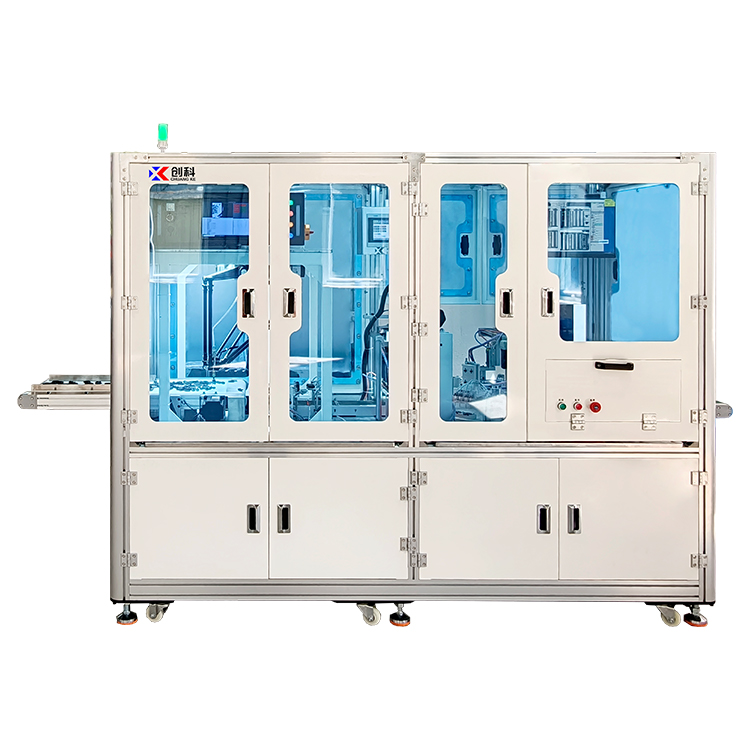
Magnetic Ring Clip Assembly Machine
Special automated equipment for automatic assembly of clip magnetic rings, adopting a cam indexer circular dial layout; operators manually replenish materials to the conveyor, while all other processes are completed automatically.