





Sumitomo Electric's Horizontally Recyclable Dust Core Wins SX Award; Low-Carbon Heat Treatment Draws Attention
Recommended Blogs
- •HEVO Joins Purdue University to Advance Compatibility Verification of Static, Dynamic and Bidirectional EV Wireless Charging
- •Power capacity expansion in Bac Ninh, Vietnam brings opportunities for magnetic component automation upgrades
- •Würth Elektronik of Germany Launches WE-SLSP Compact Common-Mode Chokes; Small-Space Filtering Drives Precision Magnetic Core Manufacturing
- •Multi-Specification, Small-Batch Common-Mode Cores: A Flexible Dispensing and Cartoning Line Tackles Changeover Challenges
- •Looking at Magnetic Core Packaging Through Custom Automation in Apple’s Supply Chain: Visual Dispensing, Inline Inspection, and Flexible Changeover
- •Magnetic Component Companies Step Up “Materials + Smart Manufacturing”: What Automation Support Does Flexible Capacity Expansion Need?
- •High Growth in Nanocrystalline Magnetic Cores: As PV and Storage Volumes Rise, Equipment Must Prioritize Mass-Production Consistency
- •Amorphous Nanocrystalline Moves Toward High-Frequency New Energy: How Can Back-End Equipment Meet Demand?
- •Nanocrystalline Automotive Wireless Charging Efficiency Surpasses 98%; Iron Core Production Equipment Builds a Solid Foundation for Green Energy Efficiency
- •Implementing Overseas Automated Magnetic Component Production Lines: How to Adapt to Different Regional Production Standards?
Sumitomo Electric's Horizontally Recyclable Dust Core Wins SX Award: Low-Carbon Core Materials and Heat Treatment Process Draw Attention
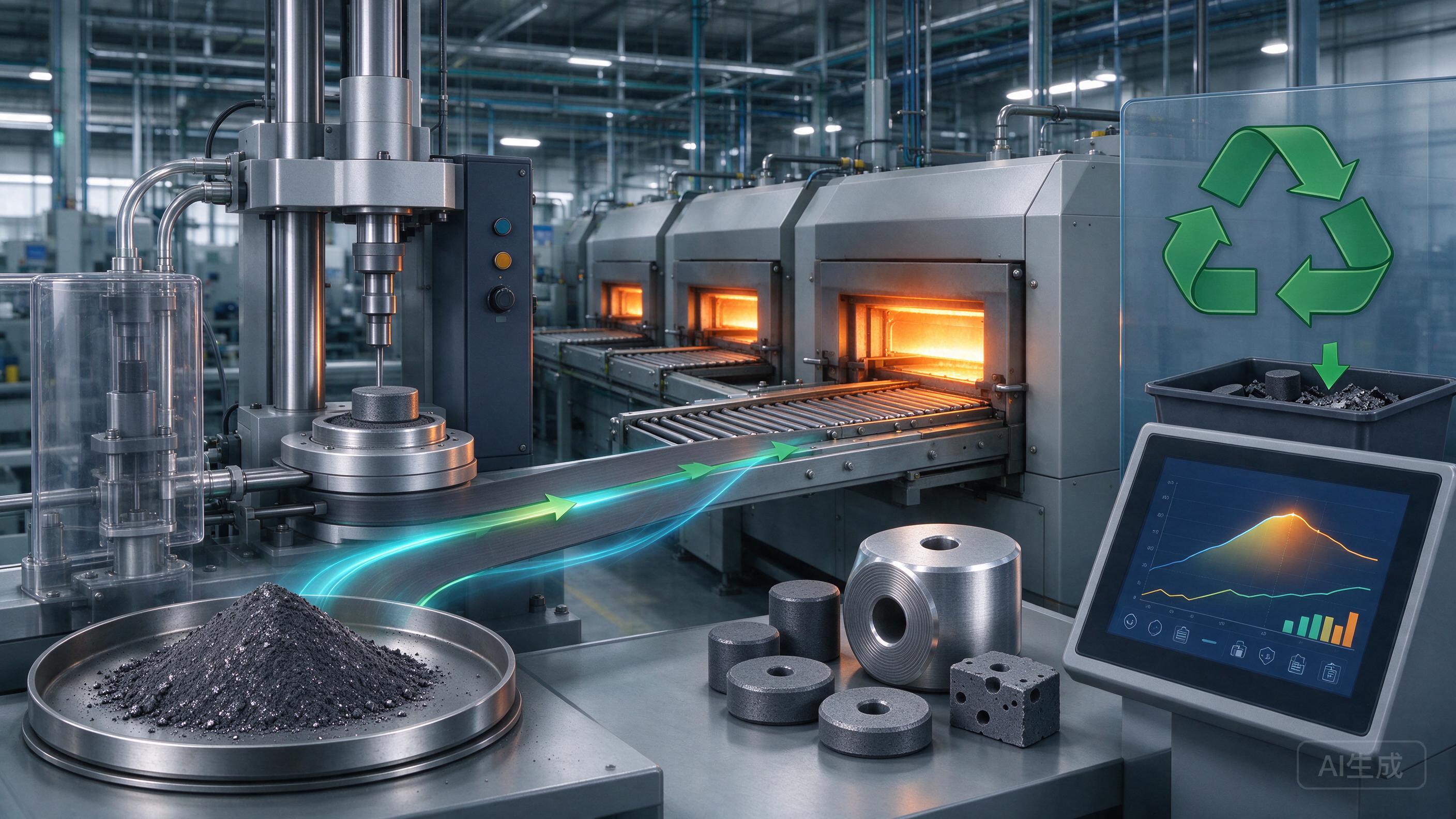
In November 2026, a notable sustainable product development emerged in Japan's magnetic materials industry. Sumitomo Electric Industries announced that the horizontally recyclable dust core for motors from group company Sumitomo Electric Sintered Alloy received the "2026 SX Award Incentive Award." The product is made by compacting and heat-treating insulation-coated iron powder, with an emphasis on reducing carbon emissions in the manufacturing process and achieving horizontal recycling. This article reviews the overseas news facts and, based on the product layout of Zhaoqing Chuangke Intelligent Equipment Technology Co., Ltd. in core heat-treatment equipment, analyzes its reference value for the magnetic materials manufacturing stage.
I. Overseas News Facts: Award, Company and Product
According to a press release issued by Sumitomo Electric Industries on November 2, 2026, the award-winning product is Sumitomo Electric Sintered Alloy's "horizontally recyclable dust core for motors." The award is the "2026 SX Award Incentive Award," organized by Japan's General Incorporated Foundation Sustainable Management Promotion Organization.
Sumitomo Electric Industries stated in the press release that the dust core is compacted from insulation-coated iron powder and then heat-treated, mainly for motor core applications. Compared with conventional electromagnetic steel sheet solutions, the product can significantly reduce carbon dioxide emissions during the manufacturing process, while enabling horizontal recycling without degrading material properties and reducing reliance on rare-earth magnets.
The above content is based on overseas corporate disclosures and award information and does not imply any supply or cooperative relationship between Chuangke Equipment and the product.
II. Technical Points: From Insulation-Coated Iron Powder to Heat-Treated Cores
The basic process route for a dust core is to form an insulating coating on the surface of iron powder, compact the powder into the required shape, and then use heat treatment to relieve processing stress and stabilize material properties. Compared with stamped and laminated electromagnetic steel sheet structures, powder compaction has its own characteristics in terms of material utilization, shape freedom and magnetic property design.
The "horizontal recycling" emphasized by Sumitomo Electric focuses on allowing materials generated after product use or during manufacturing to return to the same type of application while retaining material properties, rather than being downcycled. The press release also identifies low carbon emissions and reduced reliance on rare-earth magnets as important components of its sustainable value.
It should be noted that the press release does not disclose process parameters such as the specific carbon emission ratio, recycling ratio or heat-treatment temperature range, so these should not be independently supplemented or inferred.
III. Industry Signal: Sustainability Requirements Are Extending into Core Manufacturing
This award shows that the Japanese market's evaluation of magnetic materials no longer focuses only on performance indicators such as permeability, loss and saturation magnetic flux density, but has also begun to consider material sources, manufacturing energy consumption, recycling pathways and reliance on key resources.
For magnetic component manufacturers, heat treatment is both a key process determining the microstructure and electromagnetic properties of cores and an important part of energy consumption management. When low carbon content and recyclability become product selling points, companies often need stricter control over furnace temperature uniformity, protective atmosphere, holding time, cooling processes and batch data, as well as the ability to record energy consumption and process curves for each product or batch.
This means that heat-treatment equipment is no longer merely standalone processing equipment; it may also become a foundational data node for material property verification, quality traceability and carbon emission management.
IV. Application Analysis of Chuangke Equipment: What General Requirements Can Annealing Furnaces Address?
From a process-correlation perspective, dust cores include a heat-treatment stage, and Chuangke already offers annealing furnace products in the field of magnetic material heat treatment. However, Chuangke's existing equipment is mainly intended for amorphous and nanocrystalline cores rather than a dedicated production line for Sumitomo Electric's dust core, so the two cannot be directly equated.
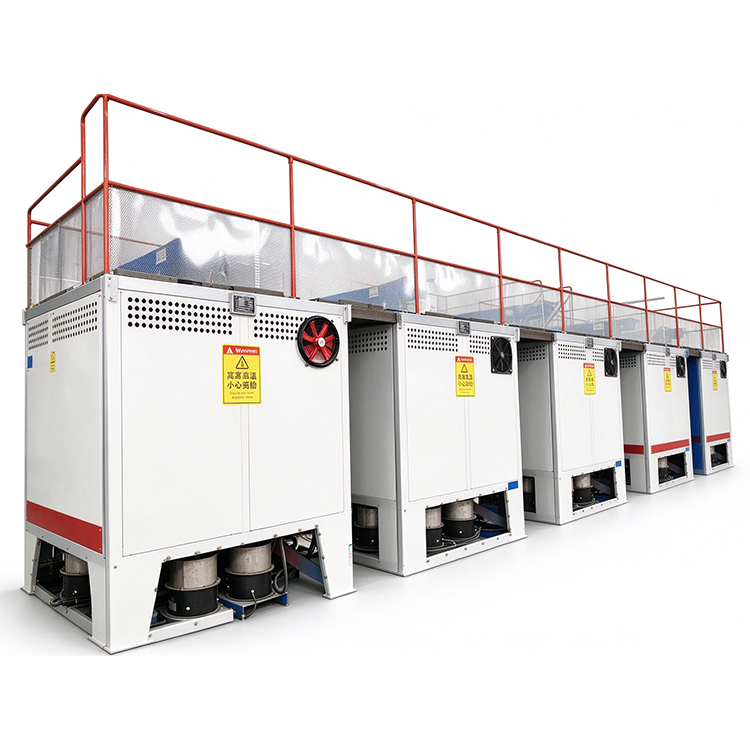
For example, the Chuangke 1800GS transverse magnetic field annealing furnace (111kW) uses a vertical batch-type vacuum furnace structure, supports vacuum and atmosphere processes, three-zone independent temperature control, transverse magnetic field magnetization, and IoT remote monitoring, and can export process data such as temperature, magnetization current, pressure and power consumption. Its 67kW and 90kW nanocrystalline vacuum annealing furnaces support multi-stage process programs, historical temperature curve queries, alarm records and data export, and are suitable for vacuum annealing heat treatment of amorphous and nanocrystalline cores.
For companies developing similar low-carbon core materials, the above equipment capabilities have reference value if their processes involve vacuum or protective atmospheres, precise temperature control, batch traceability and remote monitoring. However, whether the equipment is suitable for dust cores still requires separate validation based on insulation coating heat resistance, powder composition, annealing curves, atmosphere requirements and capacity specifications.
V. Application Boundaries: Process Directions Can Be Referenced, but a Supporting Relationship Should Not Be Presumed
It must be clearly distinguished that Sumitomo Electric's press release does not state that its award-winning dust core uses Chuangke equipment, nor does it indicate that Chuangke participated in the product's material development, heat treatment or recycling process. Therefore, the award cannot be interpreted as Chuangke annealing furnaces entering Sumitomo Electric's supply chain, much less as a claim that the relevant equipment has been validated through this product.
For Chuangke, the significance of this overseas case lies in providing direction for product and process improvement: in response to the development of low-carbon core materials, heat-treatment equipment can continue to strengthen energy-saving design, temperature uniformity, atmosphere control, energy consumption collection, process data traceability and integration with factory EMS systems. For customers with overseas production requirements, multilingual operator interfaces and batch process data export will also become optional advantages.
Conclusion
Sumitomo Electric's horizontally recyclable dust core receiving the 2026 SX Award Incentive Award reflects continued attention in Japan and overseas markets to low-carbon, recyclable magnetic materials. Insulation-coated iron powder, compaction and heat treatment form the important process foundation of this product, while the stability, energy consumption and data traceability of the heat-treatment stage will also become part of magnetic material companies' sustainable competitiveness.
Chuangke's temperature control, vacuum and atmosphere, IoT and data traceability capabilities in amorphous and nanocrystalline core annealing equipment can provide an automated solution reference for related magnetic material manufacturing scenarios. However, for dust core products specifically, actual material process validation and customized development should remain the standard, and industry trends should not be directly equated with commercial supply facts.
Reference Information
Global Cooperation
Partner With Chuangke, Win Together
Tell us about your production challenges — our engineers will design a tailored automation solution, from single machines to complete Industry 4.0 lines.
Recommended Products
 Dispensing Machine
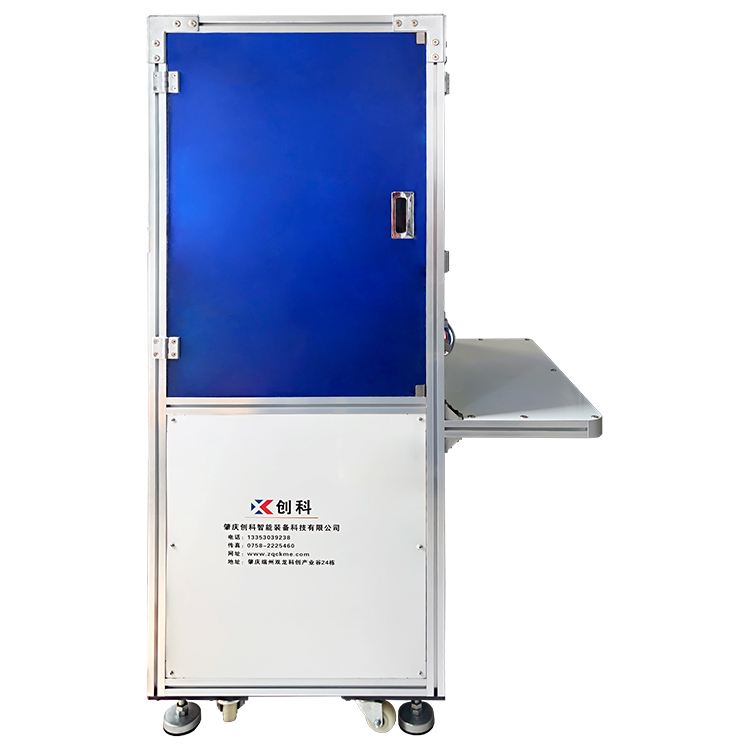
Protective Box Dual-Head Glue Dispensing Machine
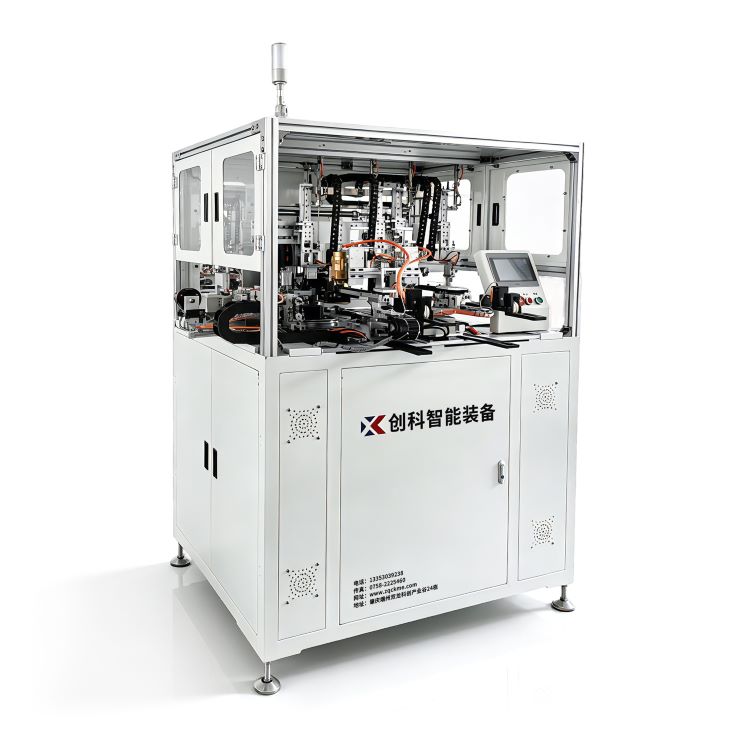
The iron core protective box glue dispensing machine is dedicated equipment developed for amorphous iron cores with a wide variety of specifications and small-batch production. Specification changeover is simple: automatic glue supply → freely set dispensing points → glue dispensing → automatic glue-string breaking. Its consistent dispensing volume effectively improves product consistency and production capacity.
 Test Tooling/Fixture
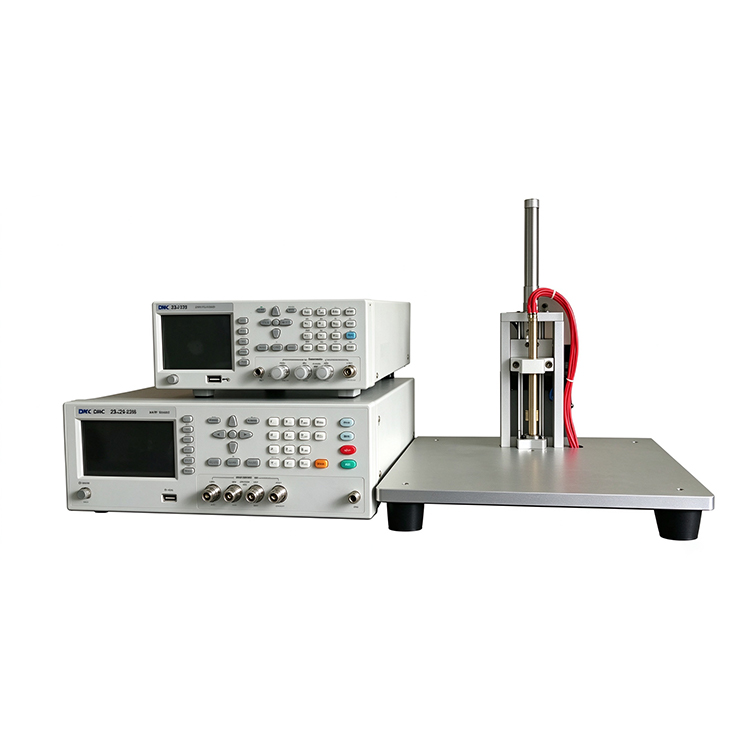
Multi-turn Test Bench
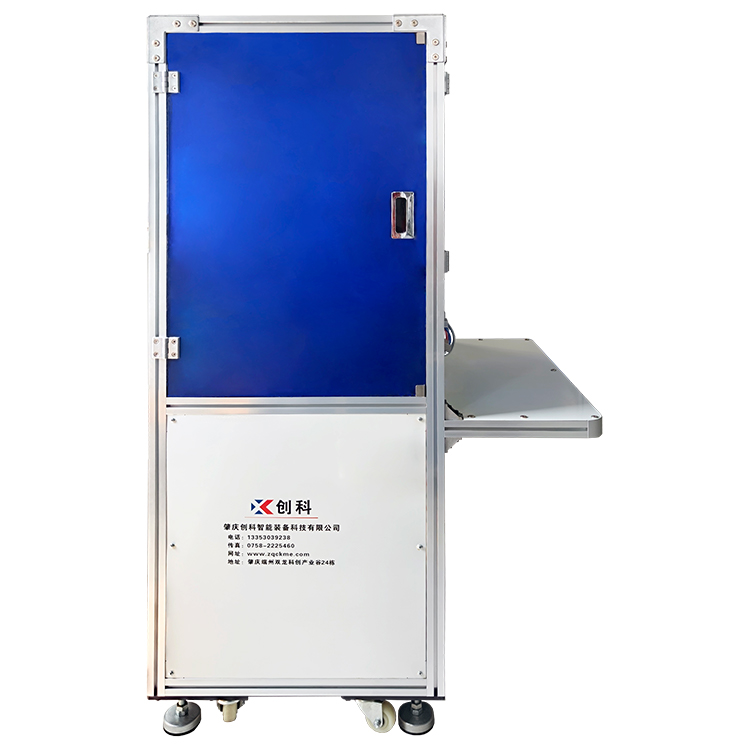
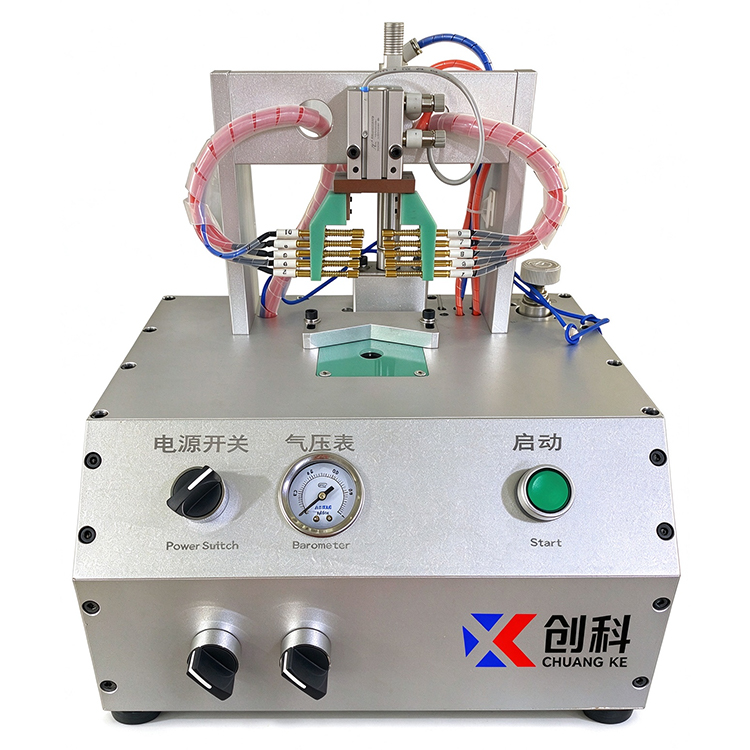
A copper rod passes through the center of the iron core to simulate the actual number of winding turns of DC-resistant iron cores and magnetic rings. Connect the prewired test bench and perform testing at the bridge test terminals. A pneumatic valve is used to start the cylinder, connecting the copper rod with the test spring contact so that the core performance can be detected all at once. Then close the valve, and the cylinder resets to complete one test cycle.
 Magnetic Ring Spray Coating Line
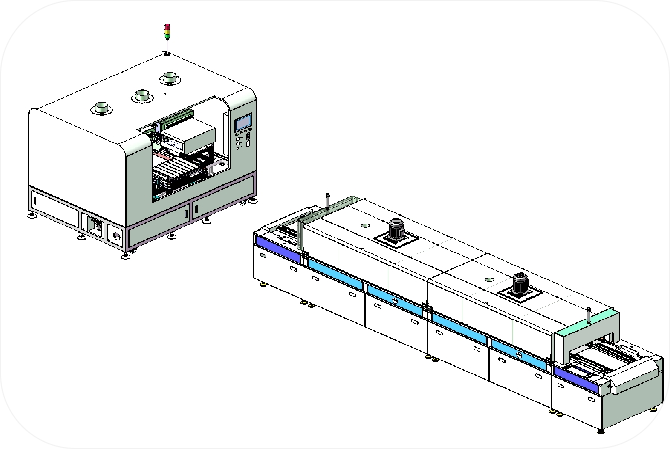
Double-Head Dip Coating Machine
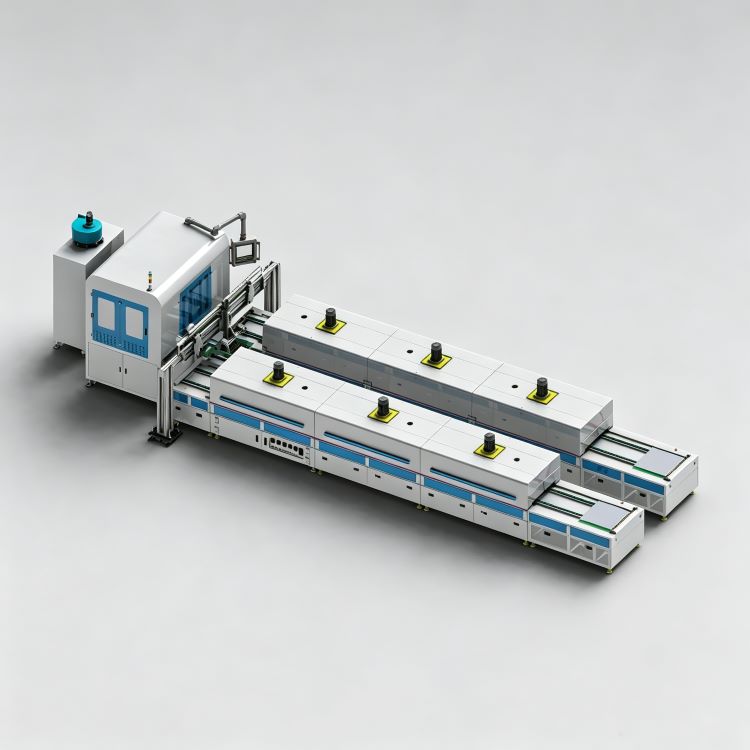
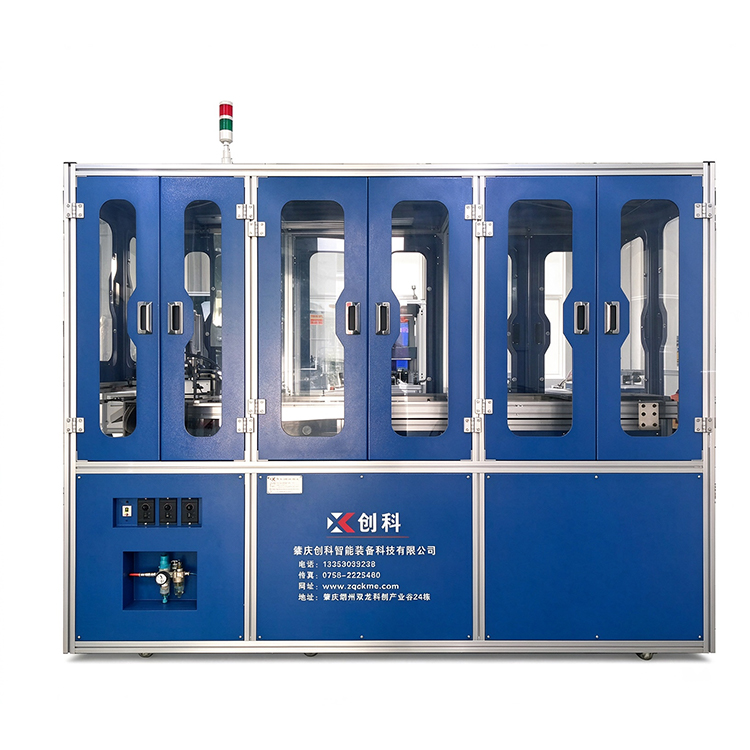
Used for powder fluidized-bed insulating coating dip coating of magnetic rings and magnetic cores. The complete equipment consists of the double-head main machine, preheating tunnel oven, and curing tunnel oven.
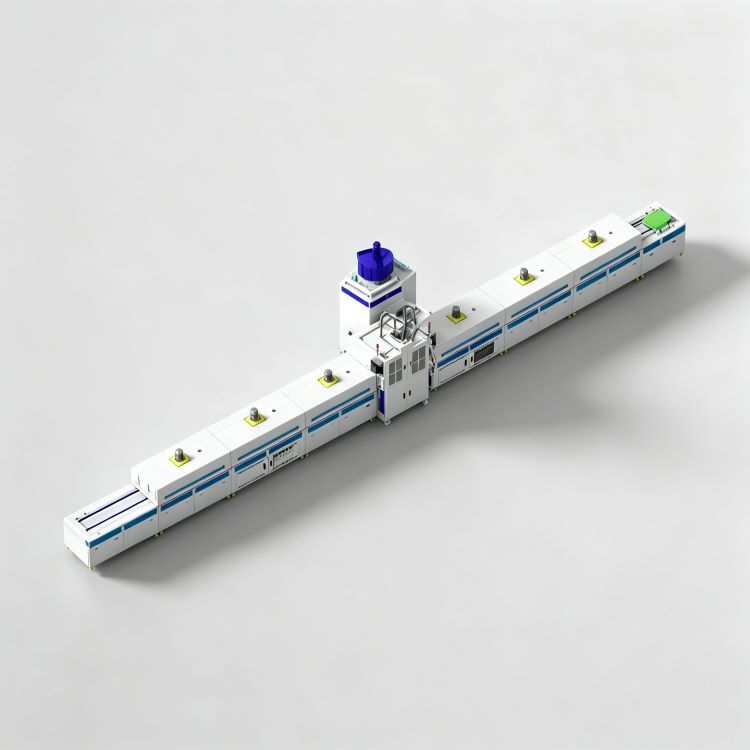 Magnetic Ring Spray Coating Line
Inline Electrostatic Spraying Machine
The Chuangke spraying machine is a powder coating line suitable for all types of magnetic material cores and electronic components. It uses a double-layer oven design to save space and an HMI control system, with each process running according to the settings. This improves the quality of coated magnetic rings and saves powder coating material, requiring only one operator. The complete process provides uniform coating thickness, good speed, a pinhole-free and glossy surface, and an extremely high yield rate. It offers the advantages of high speed, lower costs, simple installation, attractive coating finish, easy operation, and stable performance.