






Looking at Magnetic Core Packaging Through Custom Automation in Apple’s Supply Chain: Visual Dispensing, Inline Inspection, and Flexible Changeover
Recommended Blogs
- •HEVO Joins Purdue University to Advance Compatibility Verification of Static, Dynamic and Bidirectional EV Wireless Charging
- •Power capacity expansion in Bac Ninh, Vietnam brings opportunities for magnetic component automation upgrades
- •Würth Elektronik of Germany Launches WE-SLSP Compact Common-Mode Chokes; Small-Space Filtering Drives Precision Magnetic Core Manufacturing
- •Sumitomo Electric's Horizontally Recyclable Dust Core Wins SX Award; Low-Carbon Heat Treatment Draws Attention
- •Multi-Specification, Small-Batch Common-Mode Cores: A Flexible Dispensing and Cartoning Line Tackles Changeover Challenges
- •Magnetic Component Companies Step Up “Materials + Smart Manufacturing”: What Automation Support Does Flexible Capacity Expansion Need?
- •High Growth in Nanocrystalline Magnetic Cores: As PV and Storage Volumes Rise, Equipment Must Prioritize Mass-Production Consistency
- •Amorphous Nanocrystalline Moves Toward High-Frequency New Energy: How Can Back-End Equipment Meet Demand?
- •Nanocrystalline Automotive Wireless Charging Efficiency Surpasses 98%; Iron Core Production Equipment Builds a Solid Foundation for Green Energy Efficiency
- •Implementing Overseas Automated Magnetic Component Production Lines: How to Adapt to Different Regional Production Standards?
Looking at Magnetic Core Packaging Through Custom Automation in Apple’s Supply Chain: Visual Dispensing, Inline Inspection, and Flexible Changeover
Consumer electronics manufacturing is shifting from “using machines to replace labor” to “using data to stabilize processes.” According to a public report dated October 28, 2026, Apple and Chinese supply chain companies jointly developed a custom automated production line for new products and equipped the camera module line with dispensing and high-speed laser flatness re-inspection systems, improving process stability through automation, machine vision, and data monitoring. Although the report focuses on camera modules, its logic of visual positioning, in-process inspection, yield control, and rapid changeover is also relevant to back-end packaging of magnetic components for mobile phone wireless charging. Based on product materials from Zhaoqing Chuangke Intelligent Equipment Technology Co., Ltd. for its iron-core protective-box visual dispensing machine, flexible dispensing box-loading machine, and dispensing box-loading testing machine, this article outlines directions that magnetic core packaging production lines can learn from.
I. The Focus of Custom Automation Is Not “Being Unmanned,” but Process Stability
The report mentions that Apple and its supply chain jointly developed a custom automated production line for new products and configured dispensing and high-speed laser flatness re-inspection systems at key processes. This shows that high-end consumer electronics production lines are not focused on a single automated action, but on integrating process requirements, inspection checkpoints, and data monitoring into one production system.
From an industry analysis perspective, magnetic components for mobile phone wireless charging likewise face pressures from miniaturization, consistency, and delivery takt. If back-end processes such as magnetic-core protective-box dispensing, assembly, pressing, capping, and testing rely on manual labor, they are easily affected by factors such as variations in dispensing volume, incorrect assembly orientation, missed tests, and mixed grading. Therefore, automation solutions need to form continuous control around “positioning—operation—inspection—rejection—testing.”
II. Visual Positioning and Adhesive Inspection to Stop Defects Within the Process
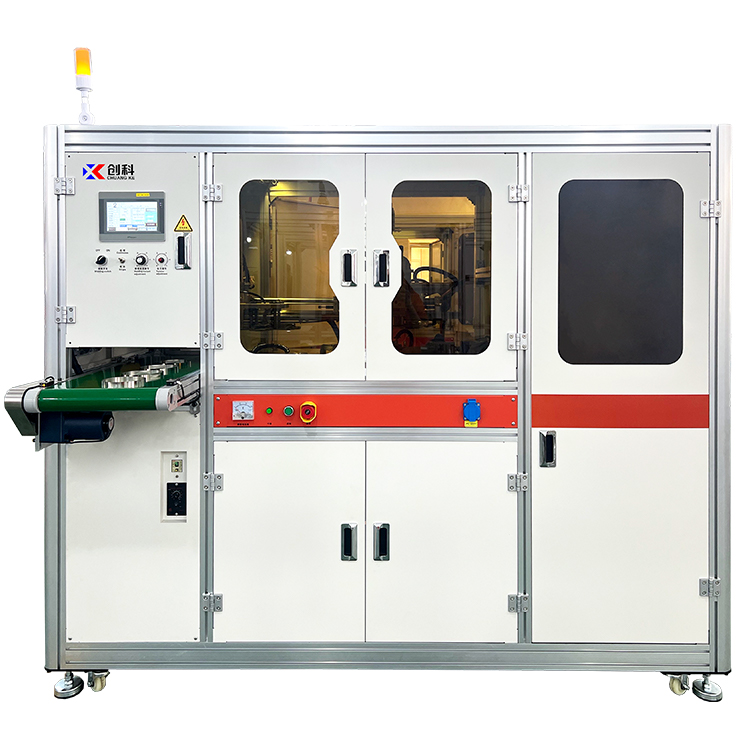
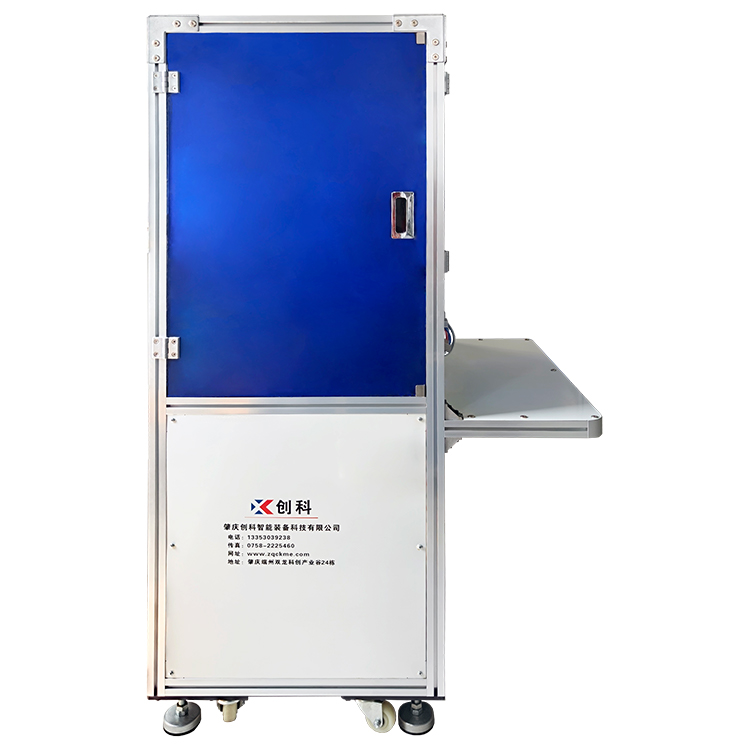
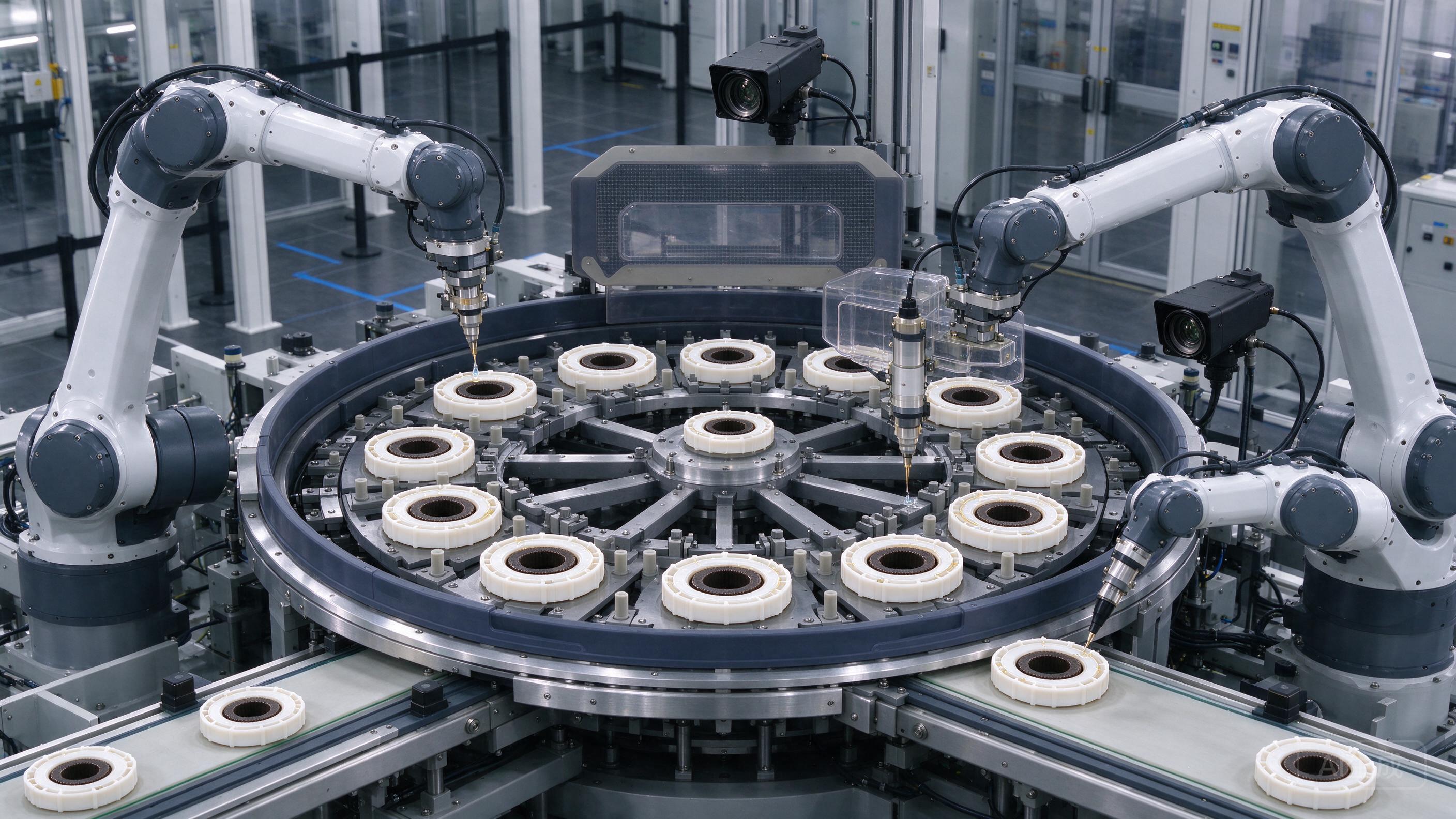
According to Chuangke’s materials, the iron-core protective-box visual dispensing machine supports dispensing on the upper and lower covers of two major categories of amorphous and nanocrystalline magnetic-core protective boxes: racetrack-shaped and round. It is equipped with a high-definition visual imaging positioning system and enables flexible production without complex tooling fixtures. The equipment supports visual teach-in programming in software, allows product programs to be saved with one click and recalled directly for style changeovers, and can dispense on the upper and lower covers simultaneously. It is compatible with silicone, silicone grease, and sealants of different viscosities, and suits round and racetrack-shaped magnetic-core protective boxes with outer diameters of 20 to 130 millimeters. Its rated dispensing speed can reach 800 to 1,200 PCS/minute, depending on product size, number of adhesive dots, and adhesive type.
For adhesive quality control, both the flexible dispensing box-loading machine and the dispensing box-loading testing machine use independent dispensing at two positions—the bottom box and the top cover—and perform visual adhesive inspection after dispensing. Products with defective adhesive can be automatically discharged and rejected. This type of visual adhesive inspection is not equivalent to the laser flatness re-inspection mentioned in the report, but its control logic is similar: do not leave defects for later manual rework; instead, identify and isolate abnormalities within the process, thereby reducing the risk of batch defects.
III. Parallel Multi-Station Operation and Test Interfaces to Reduce Breakpoints in Back-End Flow
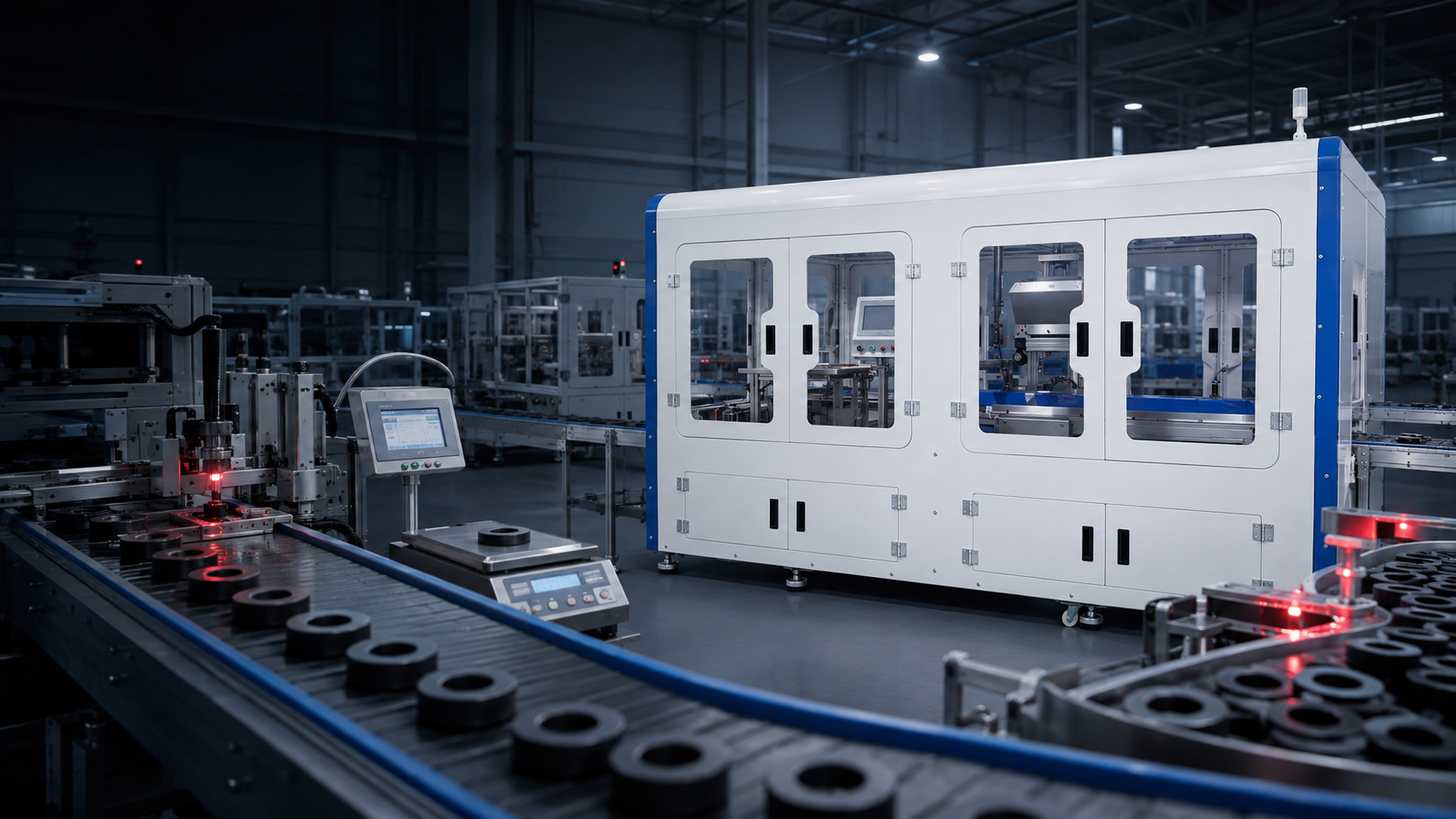
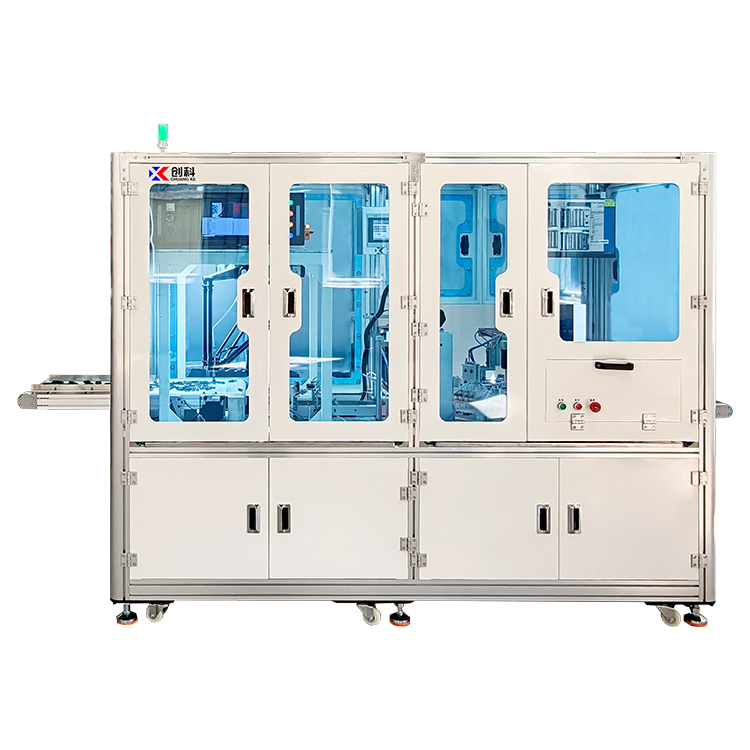
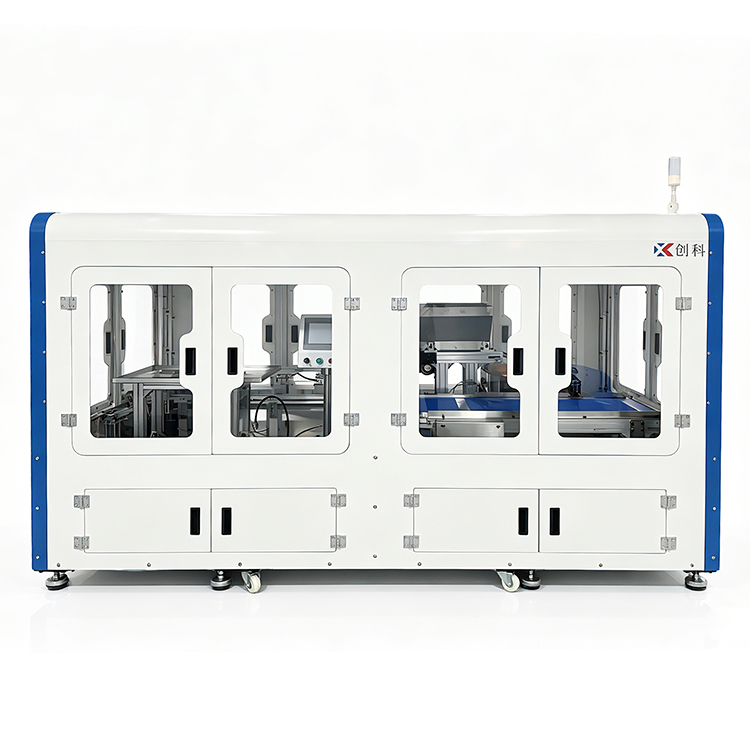
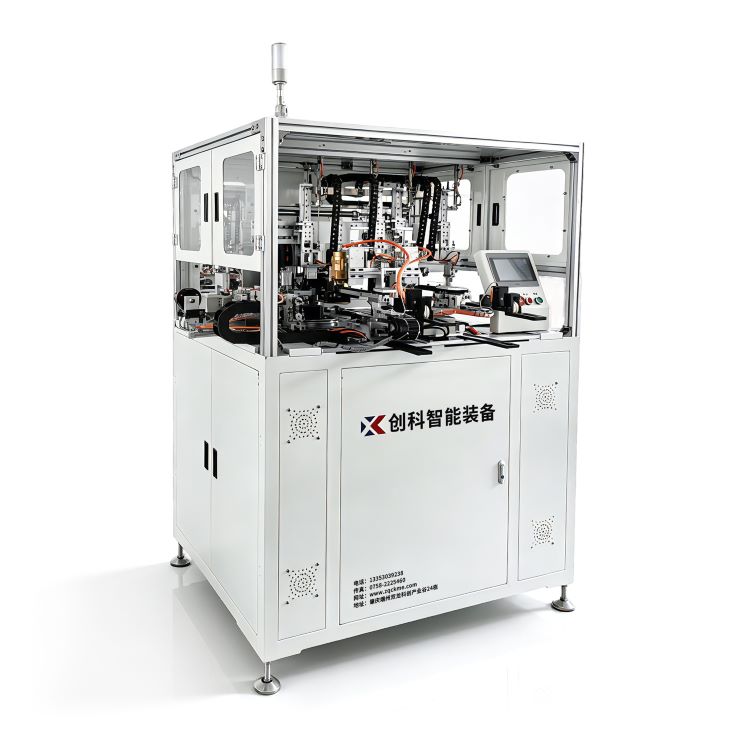
The flexible dispensing box-loading machine uses a flexible vibration bowl with a robotic arm for loading and identifies the front and back sides through visual positioning. Its turntable fixtures can simultaneously complete dispensing, assembly, pressing, inspection, and other processes in parallel. The equipment also reserves a single-turn performance testing station, supports connection to an external customer inductance tester, and can be configured with three test grading levels. It is suitable for back-end assembly of common-mode magnetic core assemblies with protective-box heights of 8 to 30 millimeters, inner diameters of 15 to 40 millimeters, and a maximum outer diameter of 45 millimeters.
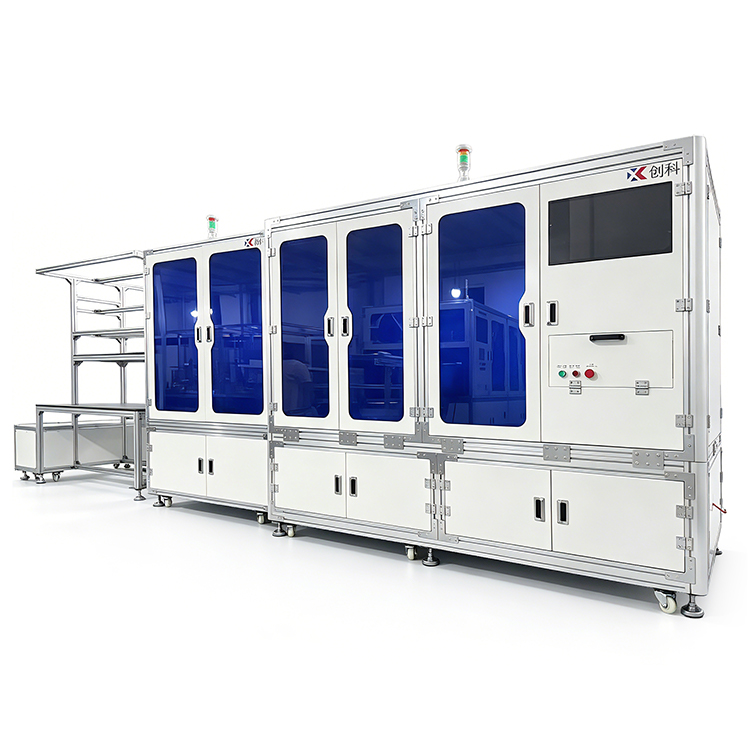
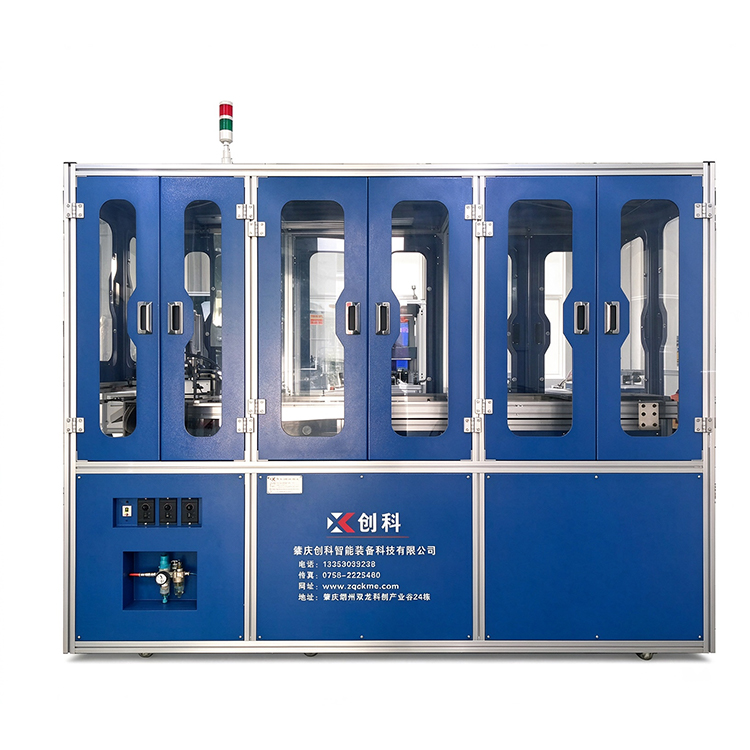
The dispensing box-loading testing machine goes further by integrating dispensing, magnetic core assembly, pressing, capping, and testing. It supports automatic test grading and reserves a single-turn performance testing station that can be configured with four test grading levels. Product materials show that it matches a capacity of 800 to 1,200 pieces per hour, runs on 220 V mains power and an air source of no less than 0.6 MPa, and occupies approximately 3.3 × 2.2 meters with a height of about 2 meters. For production lines seeking to reduce work-in-process turnover and shorten test waiting times, this integrated approach makes it easier to connect assembly with performance inspection.
IV. Rapid Changeover and Data Traceability Are Key to Flexible Manufacturing
Consumer electronics products iterate quickly and have many specifications, so magnetic core packaging equipment cannot serve only a single part number. The program saving and recall functions of Chuangke’s visual dispensing machine, along with the touchscreen parameter adjustment and fault display on the flexible dispensing box-loading machine, all facilitate multi-specification production. It should be noted that if an enterprise wants to achieve batch-level traceability, it should clarify during the customization stage whether dispensing parameters, vision judgment results, test grades, output, and alarm records can be saved and exported, and whether they can interface with the factory’s EMS or MES system. Data capability cannot be judged merely by “having a touchscreen.”
V. Before Introducing Automation, First Sort Out Four Types of Process Requirements
When planning magnetic core packaging automation, enterprises can first confirm four points: first, the dimensions and shapes of the magnetic core and protective box, as well as adhesive type and viscosity; second, whether visual inspection needs to identify missing adhesive, adhesive overflow, offset, or other defects; third, whether finished-product testing requires external instruments, the number of grading levels, and takt requirements; fourth, style changeover frequency, program management, data traceability, and workshop system integration requirements.
According to Chuangke’s materials, the company can develop various types of automated equipment according to customer customization needs and provide complete automated production solutions. Therefore, when selecting equipment, enterprises should examine not only single-machine speed, but also verify vision recognition stability, defect rejection logic, tooling changeover time, test interfaces, and safety protection, to avoid still needing extensive manual re-inspection after purchasing the equipment.
The lesson for magnetic component manufacturing from the Apple supply chain case is that automation must serve process stability and closed-loop quality. Magnetic core back-end packaging can particularly learn from practices such as visual positioning, post-dispensing inspection, parallel multi-station operation, reserved testing, and rapid changeover. Chuangke’s iron-core protective-box visual dispensing machine, flexible dispensing box-loading machine, and dispensing box-loading testing machine offer concrete product paths, but ultimately enterprises still need to verify and customize solutions based on their own product specifications, adhesive processes, capacity targets, and data traceability requirements.
References
Global Cooperation
Partner With Chuangke, Win Together
Tell us about your production challenges — our engineers will design a tailored automation solution, from single machines to complete Industry 4.0 lines.
Recommended Products
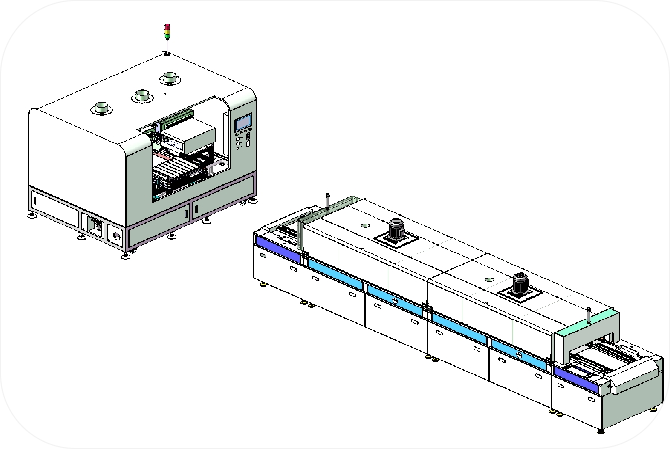 Magnetic Ring Spray Coating Line
Double-Head Dip Coating Machine
Used for powder fluidized-bed insulating coating dip coating of magnetic rings and magnetic cores. The complete equipment consists of the double-head main machine, preheating tunnel oven, and curing tunnel oven.
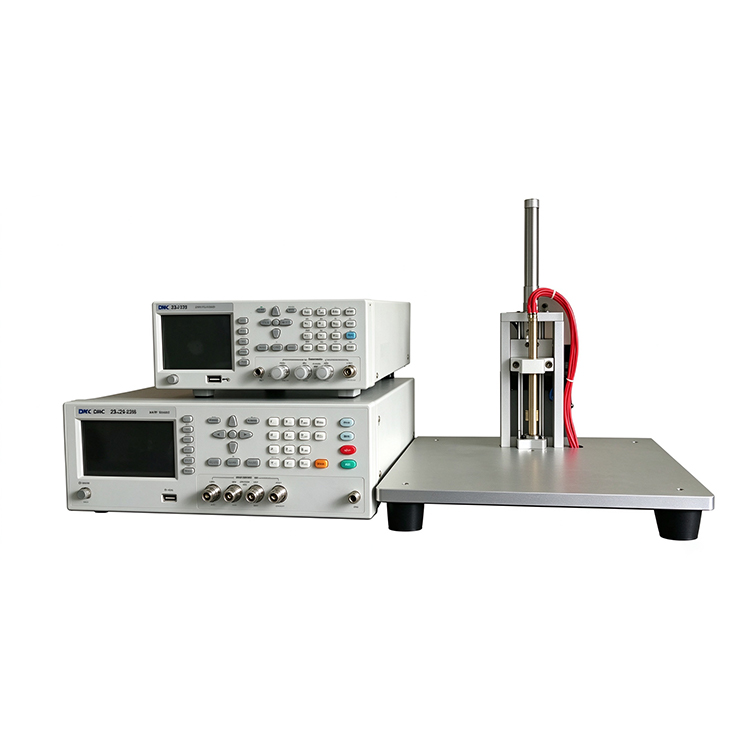 Test Tooling/Fixture
Multi-turn Test Bench
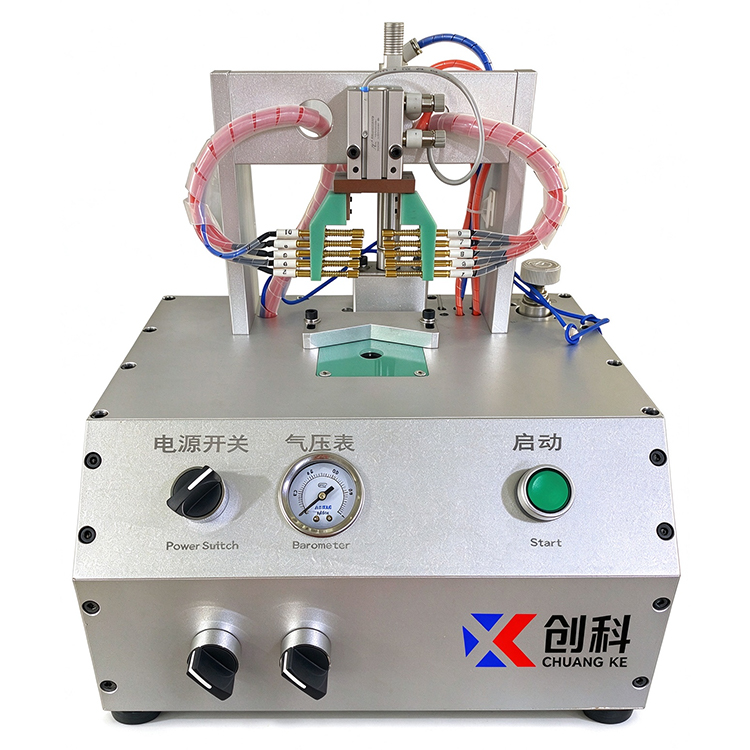
A copper rod passes through the center of the iron core to simulate the actual number of winding turns of DC-resistant iron cores and magnetic rings. Connect the prewired test bench and perform testing at the bridge test terminals. A pneumatic valve is used to start the cylinder, connecting the copper rod with the test spring contact so that the core performance can be detected all at once. Then close the valve, and the cylinder resets to complete one test cycle.
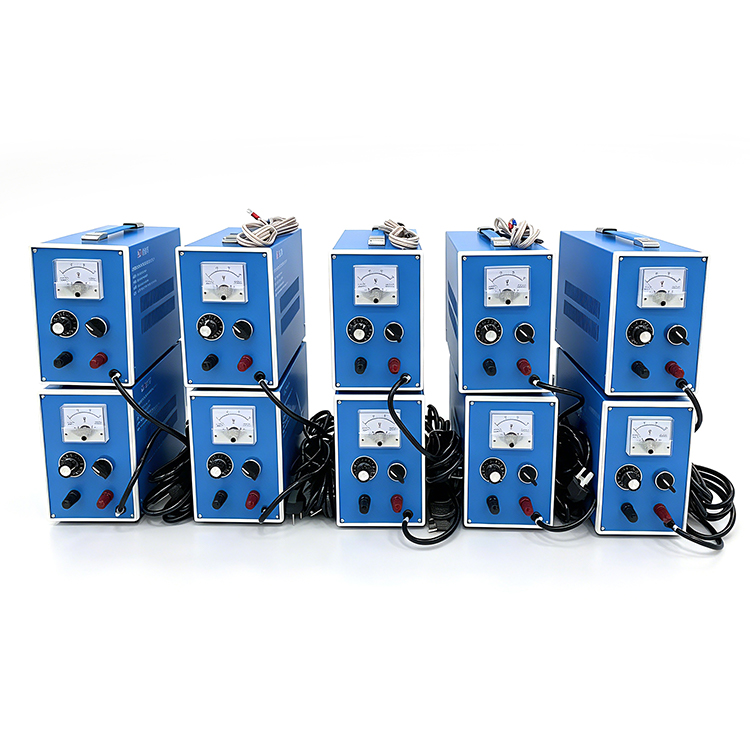 Amorphous Strip Spot Welder
This spot welder is an amorphous and nanocrystalline strip welding machine independently developed and manufactured by our company to meet industry needs.
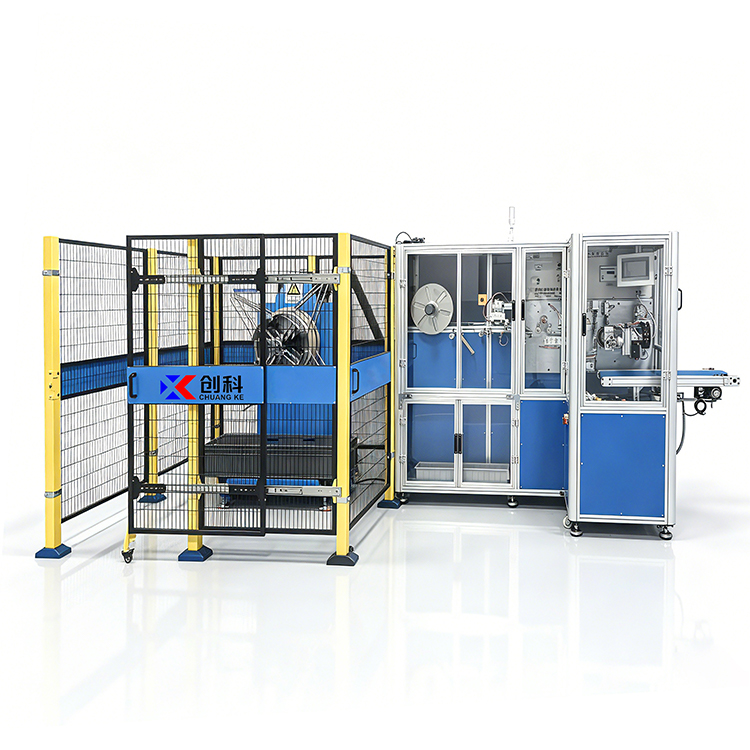 Iron Core Winding Machine
Magnetic Shielding Sheet Core Winding Machine
The Chuangke core winding machine is a high-speed, high-precision, intelligent, fully automatic winding device developed for precision cores. The machine’s core electronic control components use genuine original Panasonic components from Japan, greatly improving operating stability, repeatability and durability while delivering an extremely low failure rate and a simple, reasonable structure. With integrated fault self-diagnosis, it significantly reduces reliance on labor and effectively improves product consistency and production capacity.